
The most common advice about an old coin is to look up its date and grade, then check a price guide. For an 1827 large cent, that can mislead you: the date alone doesn't establish its value. Die variety and the coin's original surface can move it into a different price tier, so start with careful identification and condition, not a single online number.
If you're holding one at a counter, don't clean it or assume a worn coin is ordinary. First document both sides, then assess what you can confirm and leave anything uncertain marked as unknown.
What an 1827 Large Cent Is Worth by Grade
There's no single value for an 1827 large cent. Prices vary with grade, surface condition, variety, and how confidently the coin has been identified. The figures below are public listing references, not appraisals or guaranteed selling prices. A listing is an asking price; what a buyer will pay depends on the coin, its photographs, any certification, and current demand.
| Grade or variety | Listed price | What it tells you |
|---|---:|---|
| VG (Very Good) | $69.60 | Circulated, heavy wear, date and major features visible |
| Fine | $103.10 | Circulated, moderate wear with more detail remaining |
| VF (Very Fine) | $167.19 | Light circulation wear across high points |
| XF (Extremely Fine) | $326.77 | Light wear, most detail sharp |
| AU (About Uncirculated) | $590.48 average | Trace wear only on the highest points |
| Attributed N-3, N-9 or N-11 | About $155 to more than $620 | Depends on grade and third-party certification |
| Good (G) | Verify with a current specialist sale | A current, comparable sale is needed |
| Uncirculated (MS) | Verify with a current specialist sale and certification | Surface originality and certified grade matter |
These listed prices come from public 1827 large cent listings. Their spread illustrates why grade matters: a VG reference near $69.60 sits far below the AU average near $590.48. But don't treat the difference as a guaranteed return for a better-looking coin. A cleaned or altered surface can undermine an otherwise high grade, and a listing doesn't prove that a coin sold for its asking price.
The reported mintage was 2,357,732, but that number doesn't tell you how many examples survive in each grade or Newcomb variety. A sizeable original production can coexist with scarcer examples in higher grades or particular die marriages. That's why a date-and-type label alone can miss what matters to a collector.
Read the table in this order: estimate the grade range first, then determine whether the variety has been attributed. If the Newcomb number isn't confirmed, don't assume the coin belongs in a particular variety's price range. An unattributed coin can be undervalued if it proves scarce, or overvalued if a seller assigns a desirable variety without evidence.
For another example of why grade and identification matter when researching an old U.S. coin, see this guide to 1847 penny value.
Treat the table as a starting bracket, not a quote. If you can't confirm the variety, record it as unknown until a specialist attributes it.
The History and Design Behind the 1827 Cent
An 1827 cent began its life as a Coronet Head, also called a Matron Head, made at Philadelphia. It belongs to a series that ran from 1816 to 1857, when the large cent was discontinued. In a collector's tray, the coin feels less like a modern penny and more like a heavy, copper-rich pocket token made for everyday exchange.
That impression comes from its size and metal. The cent measures about 28.5 millimeters and was made of 100% copper, significantly larger than a modern U.S. cent. One hundred cents still equaled one dollar, but each large cent contained considerably more copper than later small cents. Think of the large cent as a substantial copper token, and the small cent that followed as a lighter stand-in for the same unit of money. These historical specifications are documented in the PCGS 1827 Coronet Head cent reference.
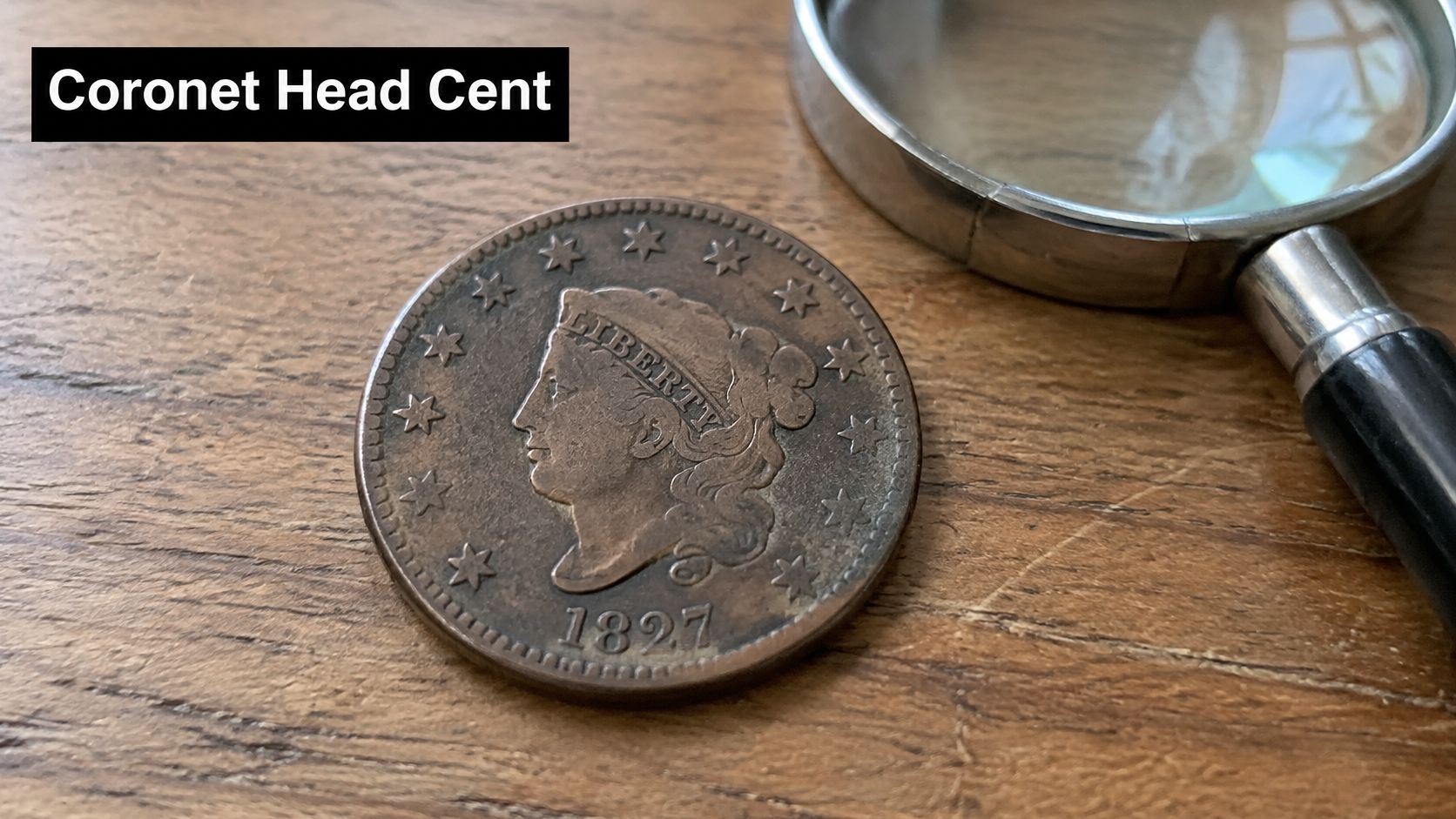
What to notice on the coin
The obverse shows Liberty wearing a coronet, while the reverse carries the cent's other design elements. Its edge is plain, and there's no mint mark. Neither feature is a defect. All 1827 large cents were struck at Philadelphia, the only U.S. Mint producing large cents during this period.
The reported mintage of 2,357,732 places the issue within the substantial, but not exceptionally high, production range of early nineteenth-century American copper coinage. That total says how many were struck, not how many have survived in collectible condition or in particular varieties. It's useful background, but it doesn't settle an individual coin's rarity or price.
Collectors also value the date as a reference point in the mature stage of the Coronet Head design, before later changes to Liberty's portrait and coronet. The large cent's eventual replacement by the reduced-size cent in 1857 gives the 1827 issue a place in the broader shift in American copper coinage.
The history explains why the coin is interesting. It doesn't, by itself, set the price. For that, a buyer still needs to assess the specific dies, grade, and surface.
Measuring, Authenticating and Spotting Altered Coins
A first-pass inspection compares the coin with its standard physical specifications: about 28.5 mm in diameter, 10.89 g in mass, a plain edge, nearly pure copper, and no mint mark. The reference specifications and Philadelphia origin are summarized in this 1827 Coronet Liberty Head cent listing. A genuine example should be much larger and heavier than a modern cent, but measurements alone can't authenticate it.
Use these steps to document the coin without changing its surface.
- Remove only loose dust. Don't rub, polish, or apply a cleaning solution. Even a well-intended wipe can leave marks or remove surface evidence that a specialist needs to see.
- Weigh it accurately. Use a digital scale that reads to 0.01 g and record the result. Note the scale or measurement method if you're preparing records for a buyer or reviewer.
- Measure the diameter. Use calipers across the coin's center and record the measurement to 0.1 mm. Avoid squeezing the coin or dragging the calipers across its surfaces.
- Inspect the edge. Under magnification, look for file marks, tooling, or a rim that appears altered. A plain edge is expected, but damage or deliberate work can affect both authentication and value.
- Photograph both sides. Use even light, include a measurement scale, and keep the date and die features in focus. Preserve these images before any additional handling changes the surface.
- Compare the whole coin. Check the readings against a known genuine specimen, then consider edge profile, die design, and surface originality alongside weight and diameter.
How to interpret a mismatch
Copper can be lost through corrosion, cleaning, filing, or rim damage. That's why a low weight with a normal diameter doesn't automatically mean counterfeit, and why a normal measurement doesn't prove authenticity. The practical question is whether several features agree, not whether one number matches perfectly.
| Warning sign | Likely cause | Next step |
|---|---|---|
| Weight well below 10.89 g, normal size | Copper lost to corrosion, cleaning, filing, or rim damage | Record the weight, examine the edge, and document the coin before deciding what to do |
| Diameter or edge clearly off | Altered planchet or counterfeit | Stop handling it and seek professional authentication |
| Bright, polished, lustreless surface | Cleaning or polishing | Photograph and document it; expect the condition assessment to account for the surface |
| Unnaturally uniform color or artificial patina | Chemical treatment or artificial toning | Ask a specialist to review it before pricing |
| Filed or tooled rim | Edge alteration | Treat it as altered and get an expert opinion |
A difference in mass may reflect wear or damage, but a diameter or edge that is clearly wrong is a reason to stop and ask for professional help. Don't try to test the metal with chemicals or abrasive tools. Those methods risk damage and don't replace a full examination of the dies and surfaces.
> Practical rule: Photograph and measure first. Make no conservation decision until you've documented what's there.
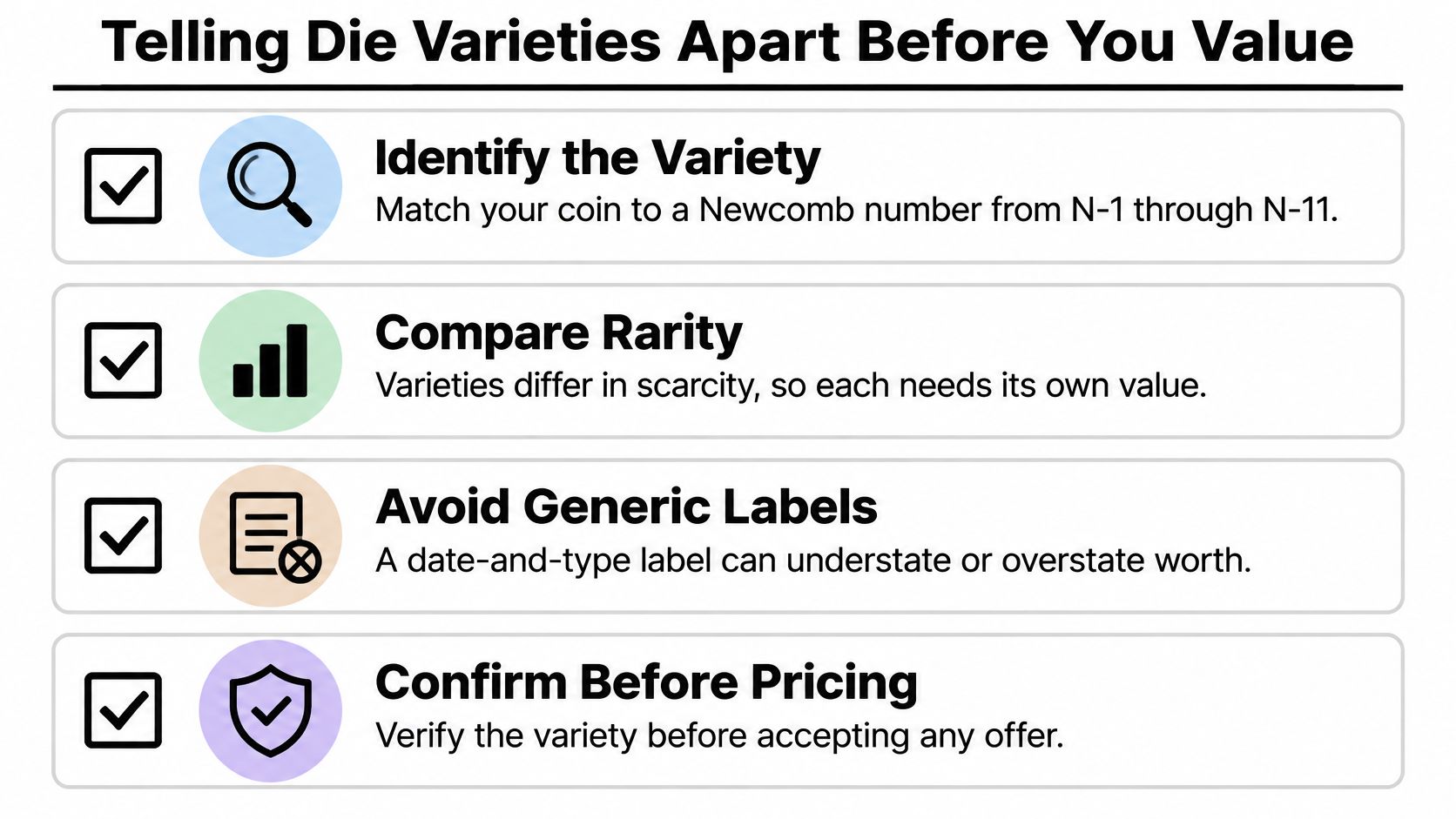
Telling Die Varieties Apart Before You Value
Think of the date as the coin's name and the die details as its fingerprint. Two 1827 large cents can share the same date and general design while coming from different die pairings. Collectors commonly catalog the issue in Newcomb varieties from N-1 through N-11, and rarity differs among them. A generic date-and-type label can therefore miss a meaningful difference in desirability and price.
Attribution depends on matching clues on both sides. The position of the date against the dentils, the stars, details in Liberty's portrait, and marks from the dies all help narrow the match. Reverse lettering and the wreath then provide another check. One feature alone rarely settles a variety.
| Diagnostic | Where to look | Why it matters |
|---|---|---|
| Date numeral spacing | Obverse, numerals against the dentils | Die-specific placement separates varieties |
| Star placement | Obverse, stars around the portrait | Star positions help match die pairs |
| Portrait details | Obverse, Liberty's face and hair | Fine differences can indicate different dies |
| Die cracks and clashes | Both sides, across fields and rims | Cracks and clashes can help confirm a die or die state |
| Reverse lettering and wreath | Reverse, legend and wreath | Matching the reverse to the obverse confirms the pairing |
| Proof-like or one-sided features | Both sides, surface and fields | Unusual pieces may need specialist review |
Not every 1827 is a standard business strike. The American Numismatic Society's large-cent reference material documents unusual proof-related material, including one-sided proofs. If your coin looks prooflike or has an unusual feature, don't force it into a normal variety description before someone qualified has examined it.
The safe sequence is straightforward: photograph both faces under even light, don't clean the coin, and get an opinion from a recognized large-cent specialist or an established grading service if it may be scarce or prooflike. A useful photo should show the date, dentils, stars, lettering, and any cracks clearly. If you're comparing how identification affects another historic coin, this guide to 1853 half dime value offers a related example.
Until the match is confirmed, describe the coin as unattributed in a sale listing or pawn record. That's more accurate than assigning a Newcomb number from a partial visual match.
How Wear and Surface Condition Change the Price
Grade the coin by reading its wear on specific high points, then judge the surfaces for originality. On the obverse, inspect Liberty's hair, cheek, and coronet; on the reverse, look at the wreath. A soft-looking coin may reflect circulation, but bright surfaces can also hide cleaning. Appearance alone isn't a reliable grade.
Read the wear from the devices
At the low end of the scale, Good shows the date and outlines of the devices, while much of the major design is worn flat. Very Good retains more recognizable features, though the high points show moderate wear. In Fine, detail remains clear across more of the design and wear is more even. Very Fine has lighter wear on the high points and sharper overall detail.
In Extremely Fine, wear is limited to the highest points, with most design details still sharp. About Uncirculated means trace wear, usually alongside near-full luster. Mint State means no circulation wear; originality and eye appeal then matter heavily to the assessment.
Those descriptions are guides, not a substitute for a close examination. A coin can look sharp in a phone photo but show friction, cleaning, or surface problems under good light.
Original surfaces aren't a cosmetic bonus
Original color and patina can matter more to collectors than a bright, freshly polished look. A warm red-brown surface may be more desirable than a coin with similar wear that's been cleaned, because polishing can leave the cent unnaturally bright and lustreless. Don't clean a coin to make it look newer.
Eye appeal is also part of the overall impression. A balanced, even surface can present better than one scattered with spots or distracting marks. If the color looks unnaturally uniform or the surface seems altered, let a specialist judge it rather than trying to restore it yourself.
Grade conservatively. A generous self-grade is a common source of disappointment when a buyer sees more wear or cleaning than the owner noticed. Use the price references above only after you've made a cautious assessment of wear and surface originality, and keep variety attribution separate from grade.
Getting Expert Attribution and Grading
Professional review makes sense when the coin may be a scarce die variety, has an unusually original high-grade surface, or appears prooflike or one-sided. These are the cases where a specialist's attribution may change how buyers assess the coin. If it looks ordinary and circulated, you can start with a careful photo record and a local evaluation rather than assuming that certification is automatically worthwhile.
Before sending it anywhere, prepare clear photographs of both sides, the measured weight and diameter, any known purchase or collection history, and relevant provenance notes. Keep the coin untouched. Cleaning it while a review is pending could remove the very surface evidence a reviewer needs.
Ask for a written result
You can seek an established third-party grading service that evaluates grade and variety, or ask a recognized large-cent specialist for a written attribution. Tell the reviewer you want the Newcomb variety identified as well as the condition assessed. For practical context on professional review and coin evaluation, see this guide to the 1884 Carson City silver dollar.
A certificate or written opinion gives a prospective buyer something to check. It can support a more specific price discussion, but it doesn't guarantee a particular sale price. Review may also lower an estimate if the coin has been cleaned, altered, or graded less favorably than expected.
If the variety isn't confirmed, keep it marked as unattributed in your records. Leave the coin unhandled while review is pending, and ask for both the variety and grade in writing.
Selling or Pawning Your 1827 Large Cent
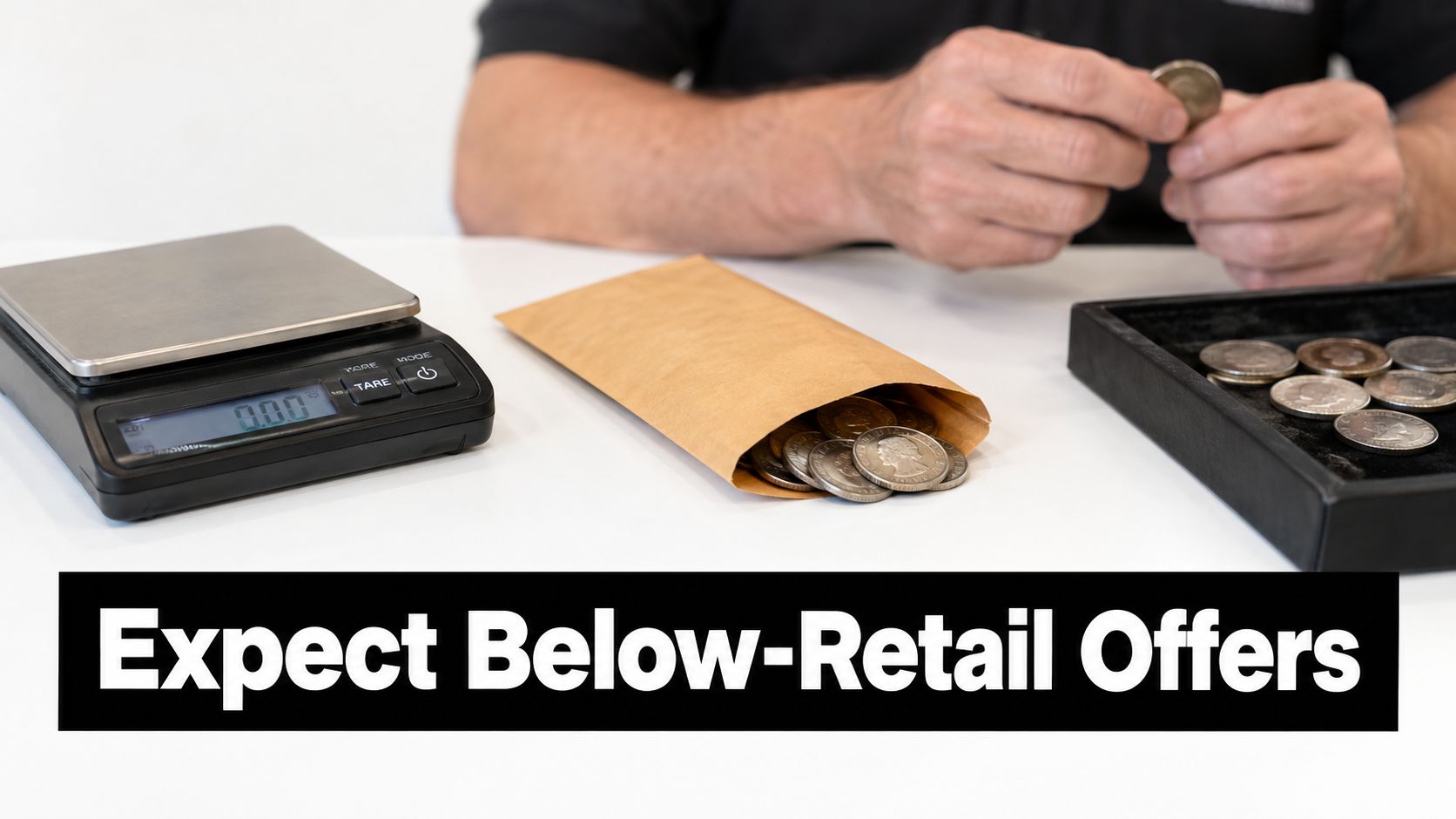
At a counter, the buyer's first job is to establish what can be confirmed. They may weigh and measure the coin, inspect its variety and surface, and estimate a grade. An offer can be below a retail reference because a shop needs room for resale costs and risk. The offer also depends on what the shop can substantiate, not only what the owner hopes the coin might be.
A pawn loan uses the coin as collateral and may allow you to redeem it under the loan terms. An outright sale is final. In either case, the variety and condition that the buyer can verify affect the offer. Ask what the shop has identified, what remains uncertain, and whether its assessment is written down.
Bring records, not polish
Useful documentation includes photographs of both sides taken before cleaning, recorded measurements, any prior appraisal or certificate, purchase receipts, and family or collection history. Clear provenance can help establish context and credibility, but it doesn't raise the coin's value by itself. Don't create a polished surface in an effort to make the cent more appealing.
Have the variety attributed before selling if it may be scarce. Compare offers from more than one buyer, and ask each to explain whether the price reflects an attributed Newcomb variety or an unattributed date-and-type coin. For collector-grade copper, melt value is only a few cents, so collector value, not the copper alone, drives the meaningful price discussion.
A practical decision path keeps the process grounded:
- Photograph both sides and stop unnecessary handling.
- Record weight and diameter against the reference specifications.
- Attribute the variety, or mark it unattributed if it hasn't been confirmed.
- Grade conservatively and use the listed-price table as a bracket, not a promise.
- Choose your route: keep a common circulated piece, sell or pawn if the offer is competitive, or seek grading when the coin appears original and high-grade.
Decide what you need from the transaction
If speed matters, a local counter review can provide a direct offer without requiring you to manage a private sale. If you believe the coin may be a scarce variety or unusually well preserved, take time to document it and get an independent attribution before accepting an offer. A second opinion is useful when the first buyer hasn't explained the variety or condition basis.
Owners in Boise, Meridian, and Nampa can request an in-person coin review at Idaho Pawn & Gold Exchange. Bring your records and ask the buyer to put the grade and variety in writing before you decide. That gives you a clearer basis for comparing a pawn loan, an outright sale, or keeping the coin.
---
Idaho Pawn & Gold Exchange offers in-person coin evaluations and purchase offers, including for collectible or graded coins. If you're in Boise, Meridian, or Nampa, bring your 1827 large cent and its documentation to Idaho Pawn & Gold Exchange and ask for the variety and grade in writing before accepting an offer.