
You found a box in a closet, a tray in the attic, or a small pouch in a safe. Inside are old silver spoons, a few tarnished coins, maybe a bracelet or two from a relative's estate. Your first question usually isn't technical. It's simple. What is this worth, and who can tell me without wasting my time or lowballing me?
That's usually what people mean when they search for silver appraisal near me in Boise, Meridian, or Nampa. They want clarity. They want to know whether they need a written appraisal, a cash offer, or a short-term loan. Those are not the same thing, and mixing them up is one of the fastest ways to leave confused.
A lot of first-timers walk in expecting one number. In practice, silver can be looked at in several ways depending on your goal. If you need paperwork for insurance, estate handling, or a documented opinion of value, that's one path. If you want to sell today, that's another. If you want to keep the item and borrow against it, that's a pawn loan conversation.
> Practical rule: Before you hand over a single piece, decide what you want from the visit. Documentation, immediate cash, or short-term borrowing all lead to different outcomes.
Your Guide to Valuing Silver in the Treasure Valley
In the Treasure Valley, people bring in silver for all kinds of reasons. Some inherited it. Some bought bullion years ago and haven't checked the market since. Some are sorting through mixed boxes of flatware, serving pieces, rings, medals, and coins and don't know what's silver, what's plated, and what only looks valuable.
That uncertainty is normal. Silver pricing isn't based on sentiment, and it isn't based on what something looked like in a department store display years ago. A real evaluation depends on the item itself, your purpose, and whether the piece has value as metal, as a collectible, or as a crafted object.
Three different outcomes people confuse
The first confusion is usually between these three:
- Formal appraisal for insurance, estate, or documentation
- Direct buy offer if you want to sell now
- Pawn loan if you want cash without giving up ownership
Those numbers often differ, and they should. They answer different questions.
For Boise-area customers, local context matters too. Convenience matters, but so does being able to sit down with someone who can explain what they're testing and why. If you're carrying bullion, inherited sterling flatware, or older coin sets, you want a process that's secure, clear, and grounded in how silver is valued.
What usually works and what doesn't
What works is bringing items in with realistic expectations and a clear goal. If you say, “I need to know what this would sell for today,” that's straightforward. If you need a defensible written opinion of value, say that upfront. If you're short on cash but don't want to part with a family piece, ask about a loan instead of forcing a sale.
What doesn't work is assuming every silver item is priced the same way. A heavy piece of silverplate may look impressive and still have limited metal value. A smaller item with the right hallmark, maker, or collectible appeal may matter more.
> Two silver items can weigh the same and still land at very different values once purity, collectibility, and workmanship enter the picture.
Finding a Vetted Silver Appraiser in Boise and Meridian
You search "silver appraisal near me," pick the closest result, and walk in with a bag of flatware from your grandmother's estate. Ten minutes later, you still do not know whether you were given a formal value, a buy offer, or a loan quote. That confusion is common in the Boise and Meridian area, and it is exactly why vetting the shop matters before you hand anything over.
!A person working on a laptop at a desk with a digital map of Boise, Idaho displayed.

A reliable silver appraiser should be able to tell you, in plain language, what service they provide. Some businesses write formal appraisal documents for insurance or estate use. Some make cash offers if you want to sell. Some offer pawn loans against the item. In practice, many first-time customers call all of that an "appraisal," but those are different transactions with different numbers attached to them.
That distinction matters even more with silver because the category changes the method. Bullion rounds, sterling flatware, tea sets, coin collections, and silver jewelry do not all get handled the same way. A shop that is solid on scrap silver buying may not be the right place for a collectible set, and a formal appraiser may not be the right stop if you want same-day cash.
What to check before you visit
Call first and ask direct questions. A good shop should answer them without getting defensive.
- Ask whether they provide a formal appraisal, a direct purchase offer, or a pawn loan. If they offer more than one, ask which one you are being quoted.
- Ask how they verify silver content. Serious buyers and appraisers use testing methods beyond a quick visual guess.
- Ask whether they regularly evaluate your type of item. Sterling hollowware, coins, jewelry, and decorative pieces each bring different considerations.
- Ask how appointments and item handling work. This matters if you are bringing in estate pieces, multiple trays of flatware, or anything with sentimental value.
- Read local reviews for clarity, not just speed. Comments about explanations, fairness, and patience are more useful than "in and out fast."
Good signs and red flags
A competent appraiser or buyer explains the reasoning. You should hear specific terms such as sterling, silverplate, purity, hallmark, maker, weight, and current market value. You should also be told when an item has value beyond melt, and when it does not.
Watch for red flags:
- Pressure to sell on the spot
- No explanation of testing
- One lump number for everything in the bag
- No clear separation between paperwork value and cash offer
- Evasive answers when you ask basic questions
In the Treasure Valley, security matters too. People often bring silver in from Boise, Meridian, or Nampa after a death in the family or while settling an estate. You should know who is handling the property, whether it stays in view, and what the process looks like before anything leaves your hands.
The closest counter is not always the best choice. The better choice is the one that can explain the difference between a formal appraisal, a buy offer, and a pawn loan, then evaluate your silver in a way that fits the reason you came in.
How to Prepare Your Silver for an Accurate Appraisal
Most bad silver appointments start before you leave home. People polish old pieces, mix everything together, or show up without the one bit of history that might matter.
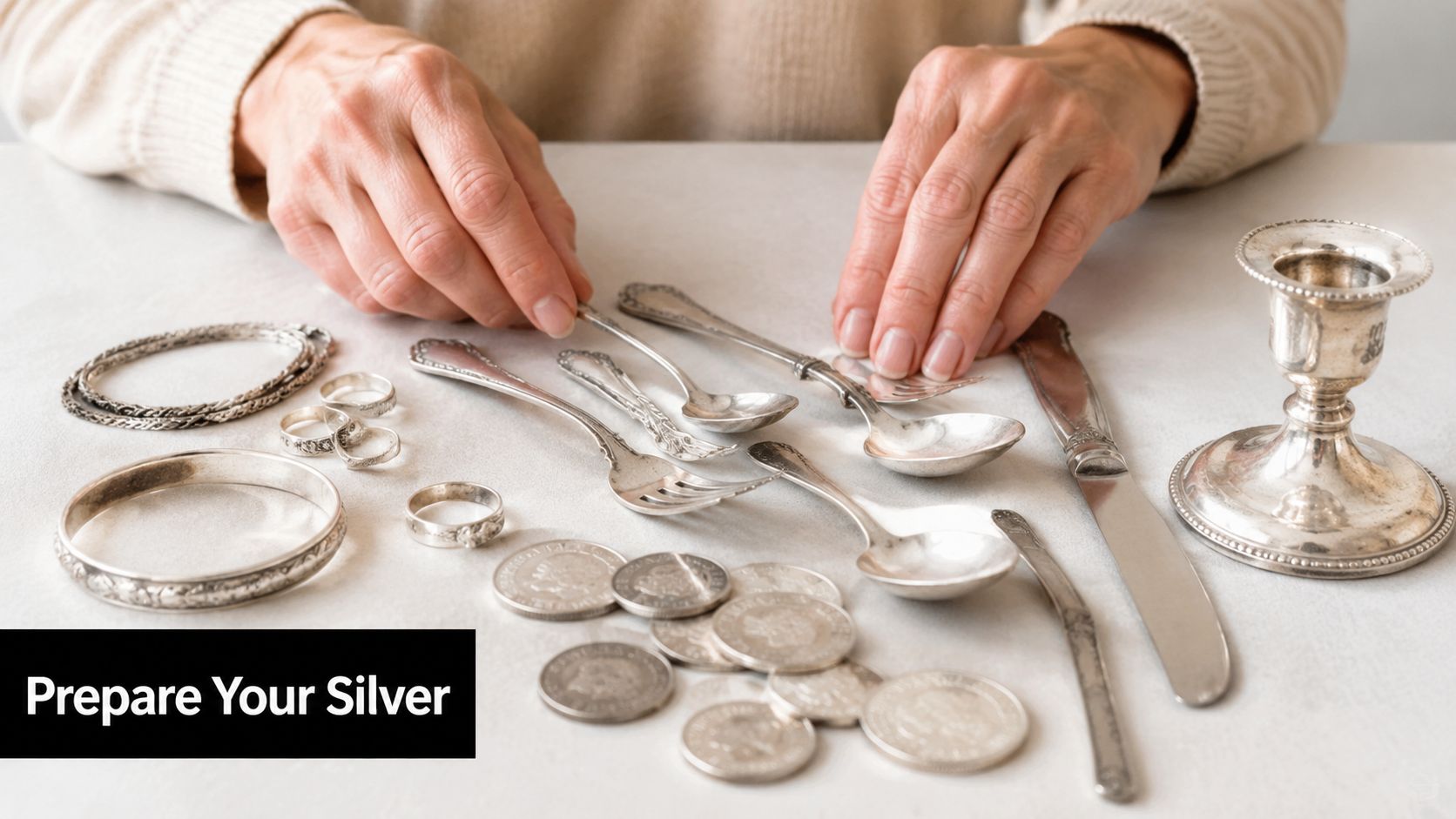
A little prep makes the visit faster and more accurate. It also helps you understand the answers you get.
What to do before you walk in
Start by sorting your items into rough groups. Keep coins, jewelry, flatware, and decorative pieces separate. If you have original boxes, receipts, old family notes, or maker information, bring them. Provenance can matter, especially on designer or collectible pieces.
Then look for marks without scrubbing the item. Common silver clues include “Sterling” or “925.” Some older pieces use different hallmarks or maker stamps. You don't need to decode them yourself. You just need to avoid damaging them before someone can inspect them.
- Leave the surface alone. Don't polish antique silver before an appraisal. Heavy cleaning can remove character and sometimes hide the details an appraiser needs to see.
- Bring related pieces together. A complete set can matter differently than loose single pieces.
- Separate obvious silverplate if marked. That saves time, but don't assume plated means worthless or sterling means automatically collectible.
- Bring any paperwork you have. Even a handwritten family note can help identify origin or date.
> Old tarnish doesn't scare a professional. Scratched-up, over-polished silver does.
Why history and category matter
Silver isn't one bucket. Appraisers commonly distinguish between melt value, premium value for collectibles, and workmanship value, and that's one reason older coins and crafted objects need a closer look. The same historical distinction still matters for U.S. coinage because the last circulating U.S. silver dimes, quarters, and half dollars were struck in 1964, a milestone that still affects how vintage silver is identified and priced today, according to Atlanta Gold & Coin Buyers.
That means your pile of old coins should never be treated the same way as a mixed lot of damaged scrap jewelry. Dates, sets, condition, and category all influence the conversation.
A quick visual overview can help you know what details to gather before your visit:
<iframe width="100%" style="aspect-ratio: 16 / 9;" src="https://www.youtube.com/embed/MNr4AuYVk00" frameborder="0" allow="autoplay; encrypted-media" allowfullscreen></iframe>
What not to assume
Don't assume a shiny item is silver. Don't assume a dark item is damaged. Don't assume inherited flatware is all sterling. And don't assume every older coin belongs in the melt pile.
If you want the cleanest answer possible, bring the items as found, grouped logically, with any history you can provide. That gives the appraiser the best chance to separate bullion, sterling, plated material, collectible coins, and crafted pieces correctly.
The Silver Appraisal Process Explained Step by Step
A proper silver appraisal is methodical. It's not a quick glance, a shrug, and a number scribbled on a sticky note.
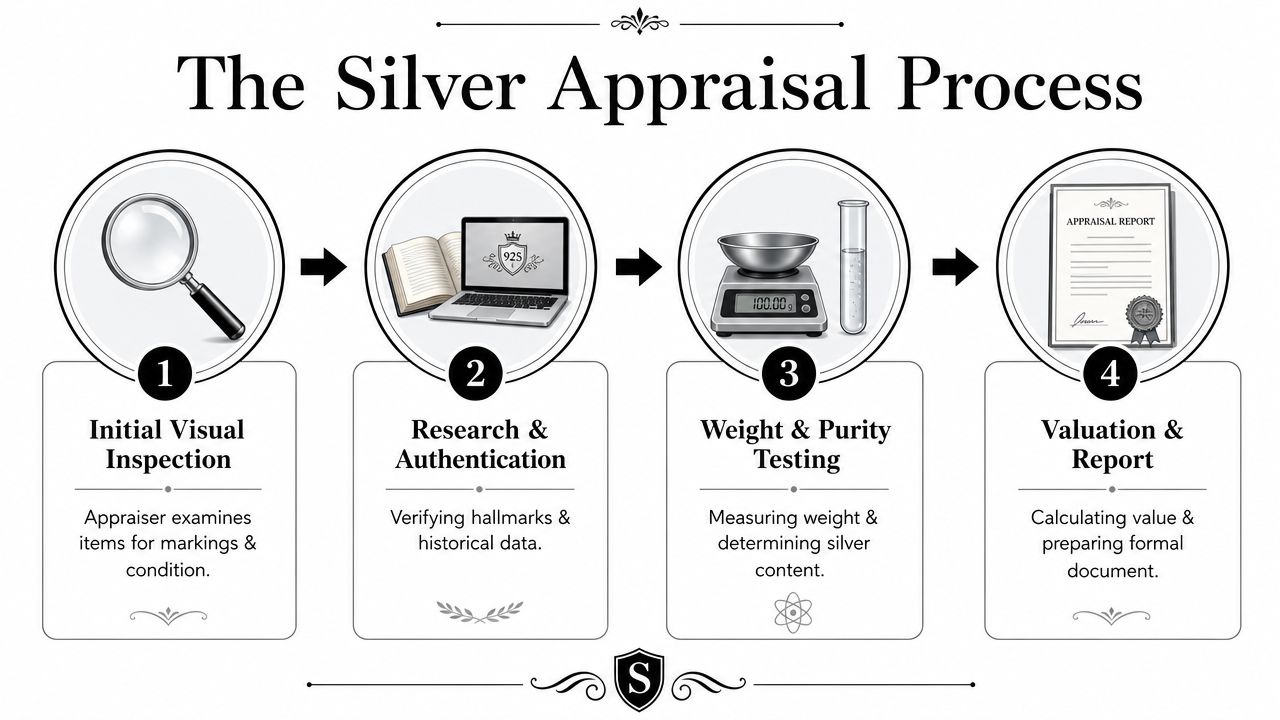
For silver, the standard workflow usually includes checking hallmarks and maker marks, weighing the item in troy ounces, testing purity with non-destructive methods, and reconciling those findings with current market pricing and documentation. A defensible report should identify purity, craftsmanship, weight, provenance, and supporting market research, as described by Alice Karle Fine Art Appraiser's sterling silver appraisal guidance.
Step one and step two
The first part is visual. The appraiser examines the item for hallmarks, maker stamps, construction quality, wear, repairs, and signs that it may be plated rather than solid silver.
The second part is identification and research. A plain sterling spoon and a named maker piece don't live in the same world. Coins also need category-specific attention. Bullion rounds, vintage U.S. coinage, and collectible issues each raise different questions.
Step three and step four
Then comes measurement and testing. A critical detail is that silver is valued by weight and purity against the live market price, and in 2024 silver traded in a range of roughly $22.08 to $34.80 per troy ounce. Appraisers measure precious metals in troy ounces, where 1 troy ounce = 31.1035 grams, and they convert tested purity such as 92.5% for sterling silver into a valuation tied to the live market, as explained by American Silver's appraisal overview.
That's why the scale reading alone doesn't settle anything. The number on the scale is only the starting point. Purity changes the usable silver content, and market timing changes the dollar figure.
> If someone gives you a value without explaining weight, purity, and category, you still don't know what they valued.
What a first-timer should expect
A professional appointment should feel transparent. You should be able to follow the logic even if you don't know the trade language when you walk in.
Here's the basic flow commonly experienced:
1. Initial review of what you brought in
2. Sorting by type such as coins, jewelry, flatware, or decorative pieces
3. Hallmark and maker check
4. Precise weighing
5. Purity testing
6. Value discussion based on your goal, which may be documentation, sale, or loan
If you've never done this before, ask the appraiser to say which number they're giving you and why. That one question clears up most misunderstandings on the spot.
Appraisal Value vs Buy Offer What Is the Difference
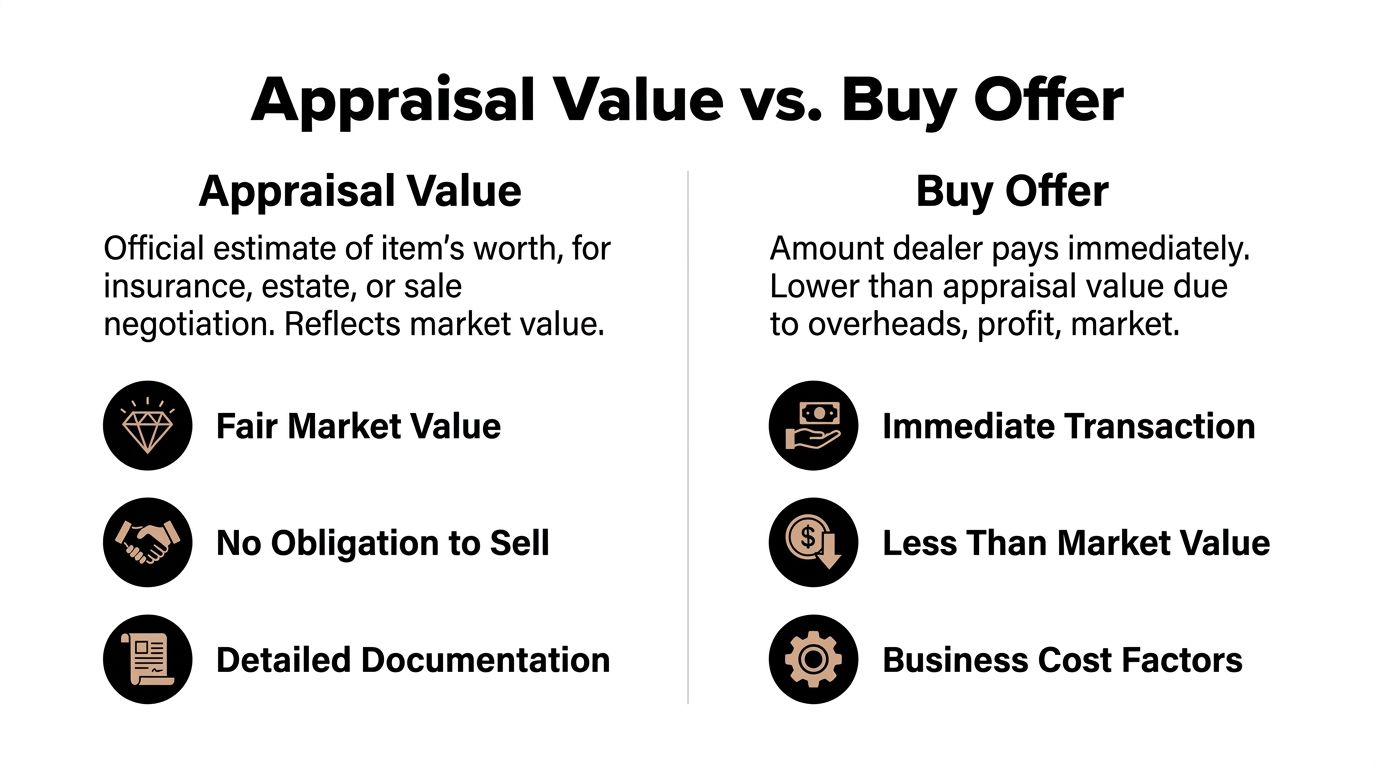
Confusion often arises from this scenario. A customer hears one number from an appraiser, another from a buyer, and sometimes a third from a pawn counter. None of those numbers are automatically wrong. They're answering different questions.
Why one silver item can have multiple values
A formal appraisal value is a documented opinion of value for a stated purpose, often insurance, estate work, or negotiation support. It isn't a promise that someone will hand you that amount in cash today.
A buy offer is what a dealer or buyer is willing to pay now. That number reflects resale risk, overhead, the item category, and whether the silver is being bought for bullion, inventory, or a collector market.
A pawn loan is different again. It's a loan amount secured by the item. The lender has to account for repayment risk and the practical reality of holding and storing the collateral.
The biggest mistake sellers make
The main technical pitfall is confusing gross weight with pure silver content. Expert appraisal guidance also notes that fineness, current market prices, craftsmanship, hallmarks, and provenance can all affect value, which is why sterling, coin silver, plated items, and branded collectible sets can appraise very differently even when they seem similar at first glance, as discussed in this expert video on silver appraisal factors.
That same issue changes all three numbers. If a seller focuses only on total weight, they can misunderstand both a formal appraisal and a cash offer.
Understanding Your Silver's Valuation Appraisal vs Buy Offer vs Pawn Loan
| Valuation Type | Primary Purpose | Basis of Value | Typical Result |
|---|---|---|---|
| Formal appraisal | Insurance, estate, documentation, negotiation | Documented opinion based on the item's identity, condition, category, craftsmanship, and relevant market context | A written value conclusion, usually with supporting detail |
| Buy offer | Immediate sale | What a buyer can pay today based on metal content, resale potential, risk, and current market conditions | Cash offer if you choose to sell |
| Pawn loan | Short-term borrowing while keeping ownership | Collateral-based lending decision tied to recoverable value and loan risk | Loan amount offered against the item |
Questions to ask at the counter
Don't ask only, “What's it worth?” Ask better questions.
- Is this a formal appraisal or a purchase offer?
- Are you valuing this for melt, collectible premium, or workmanship?
- Are you using total weight or tested silver content?
- If this is a loan, what amount can I borrow without selling?
> A clear silver transaction starts when both sides define the purpose of the number before discussing the number itself.
For silver appraisal, the key insight is often this: not one magic price, but a clear understanding of which price belongs to which decision.
Why Treasure Valley Trusts Idaho Pawn & Gold
Trust comes from transparency. People want someone local who will explain the difference between silver content, collectible value, a buy offer, and a pawn loan without turning the conversation into pressure.
That matters in Boise, Meridian, and Nampa because silver comes in many forms. One visit may involve bullion rounds. The next may involve a family tea set, older U.S. coins, or sterling jewelry that someone wants to keep but borrow against. A good local shop doesn't force all of that into one script.
The standard people should expect is simple. Clear testing. Clear categories. Clear explanation of whether the number on the table is a formal valuation, a direct purchase offer, or a loan amount.
That's why local customers keep coming back to Idaho Pawn & Gold. The goal isn't to impress people with jargon. It's to help them make the right move for their situation, whether that means documenting value, selling silver, or using it for short-term liquidity while keeping ownership.
---
If you're in Boise, Meridian, or Nampa and want a straightforward conversation about your silver, Idaho Pawn & Gold Exchange can help you understand what you have, what kind of valuation you need, and what your options are if you want to sell or borrow against it.