
You may be sorting through an inherited chain in Boise, deciding whether to sell a ring in Meridian, or eyeing a diamond pendant in a Nampa display case. The question is usually the same: what is this jewelry worth, and how do I know the offer or asking price is fair? The answer depends on more than a stamp or a glance at the gold market. Testing, net precious-metal weight, condition, stones, resale potential, and whether you want a loan or a permanent sale all matter.
A straightforward pawn shop jewelry sale shouldn't feel like guesswork. Ask what was tested, how the item was weighed, and how the offer was calculated. If you're buying, ask what evidence supports the description and what happens if a problem turns up later. Those questions make the visit clearer for everyone at the counter.
What Happens When You Walk Into a Treasure Valley Pawn Shop With Jewelry
It's a Saturday, and you've brought in a gold chain from your grandmother, along with a diamond pendant you're thinking of selling. You might expect someone to name a price on sight. A careful counter starts somewhere else: what are you hoping to do today? Do you want cash without getting the jewelry back, a loan that gives you a chance to reclaim it, or are you looking to buy?
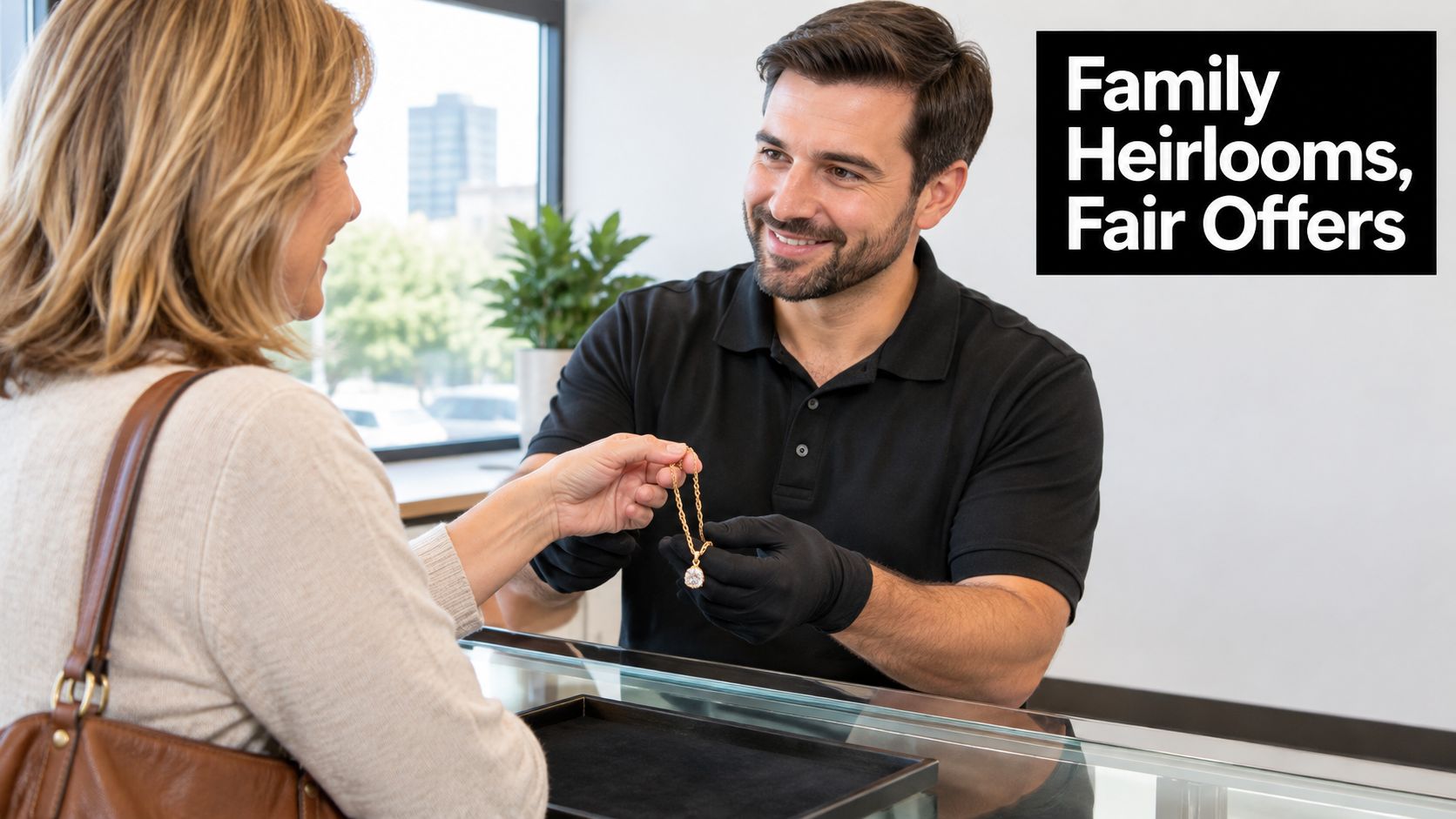
That first answer shapes the visit. Staff can make a quick visual check, note hallmarks and visible condition, then route a diamond or signed piece to someone equipped to assess it. For a gold chain, the next steps are likely to include testing and weighing. You should be able to follow what's happening and ask for an explanation before deciding.
Bring context, not just the item
Bring any grading report, appraisal, receipt, authenticity card, or information about the piece's history that you have. These documents don't guarantee a particular offer, but they can help establish whether a piece deserves evaluation as finished jewelry rather than only for its metal content. If you're considering a loan, be ready to ask about the term, repayment amount, and charges. If you're selling, be clear that you understand ownership ends when you accept the offer.
In Boise, Meridian, and Nampa, the counter conversation should be practical, not intimidating. A good visit leaves you knowing what was checked, what the shop is offering, and which transaction you're accepting. You don't have to decide before you understand the offer.
The Three Ways a Pawn Shop Handles Jewelry
A pawn counter can handle three different transactions, and they aren't interchangeable. The same chain might be used to secure a loan, sold outright to the shop, or later offered for sale from the shop's own inventory. Ask which transaction you're discussing before comparing amounts.
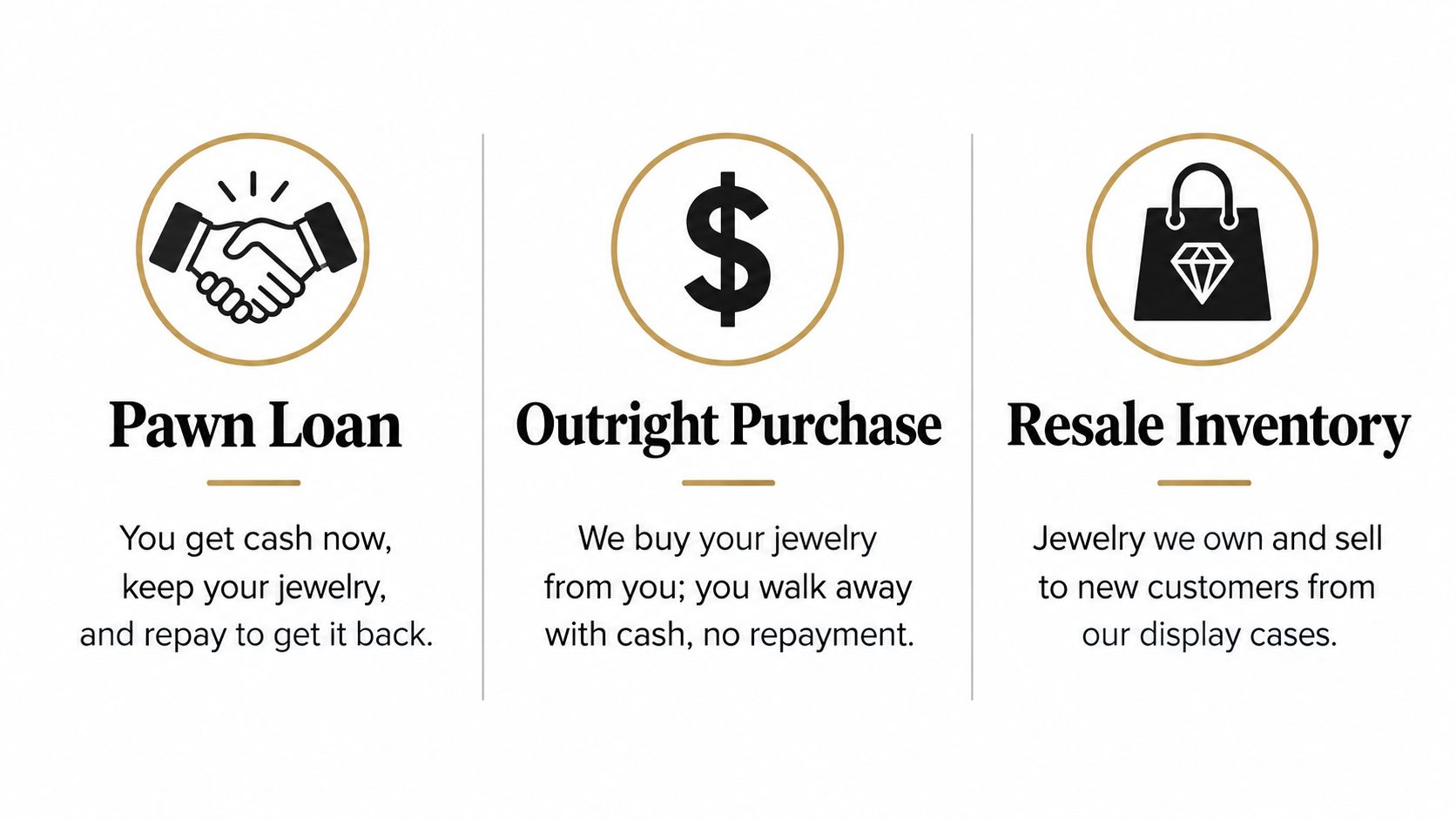
A pawn loan keeps a path back to the item
You leave the jewelry as collateral and receive money under an agreed loan arrangement. The paperwork should spell out the repayment terms and charges, and what you need to do to reclaim the item. This can suit someone who needs short-term cash but expects to repay. It's a poor fit if you already know repayment is unlikely.
An outright purchase ends ownership
The shop buys the jewelry, you accept the offer, and the transaction is complete. There's no repayment deadline and no claim to the piece afterward. The shop's offer reflects what it can do with the item, including whether it can resell it as jewelry or needs to recover its material value.
Resale inventory is the buyer's side of the counter
When you browse a display case, the shop is selling jewelry it already owns. Its asking price isn't the same as what a seller received: the shop had to inspect, test, prepare, store, and hold the item, and it must account for its operating costs and risk. That's why the cash price you see in a case will generally be higher than the amount paid to acquire an item.
A loan and a purchase can also produce different offers because they're different arrangements with different obligations and risks. Don't assume one is automatically better. Tell staff whether keeping the option to reclaim the jewelry matters to you, then compare the actual terms in writing.
How Pawn Shops Actually Price Gold and Diamonds
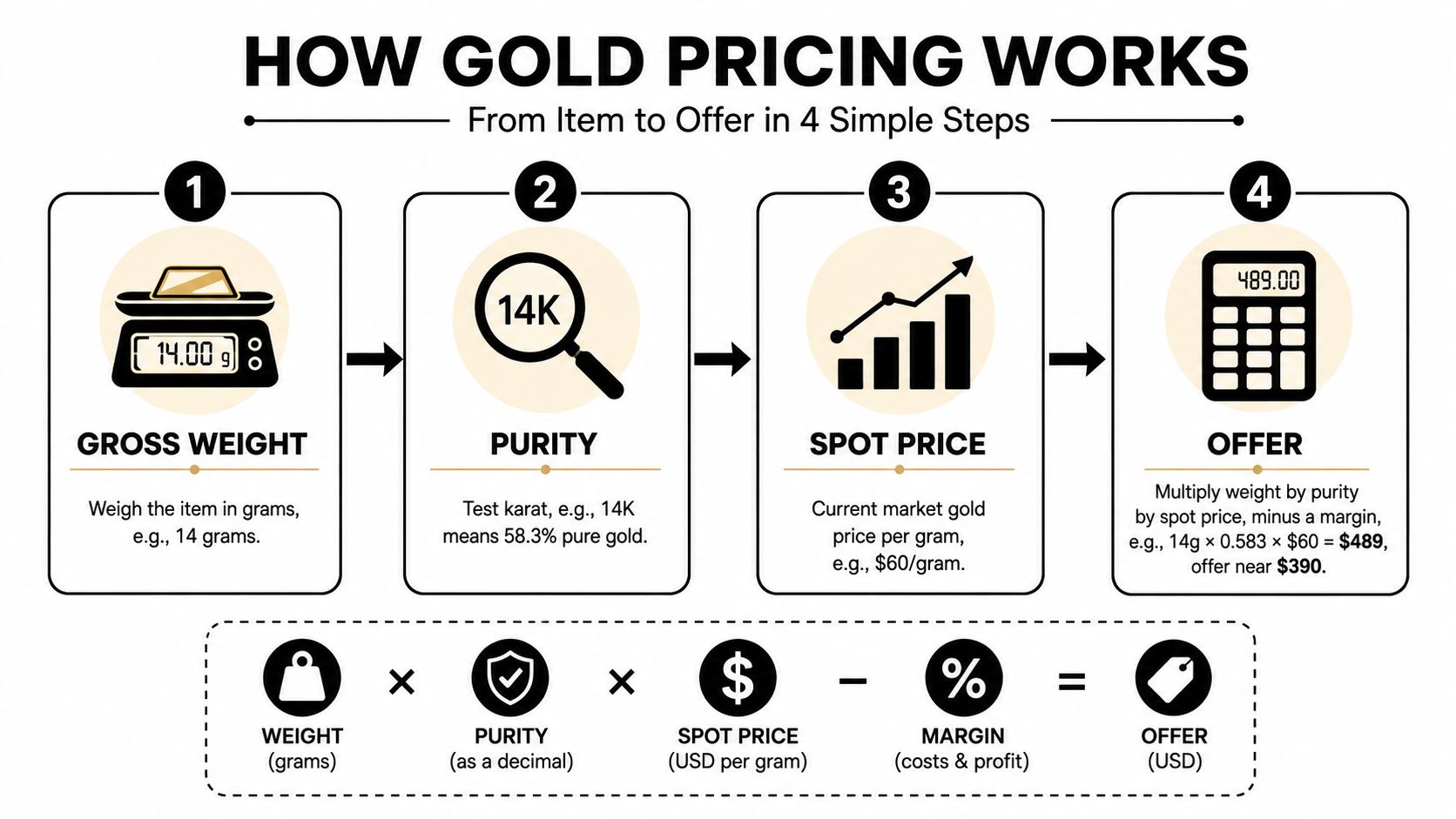
Gold pricing starts with recoverable metal, not the item's original retail price or total weight on a scale. A practical estimate is gross weight multiplied by the gold purity fraction, then by the applicable market price. The result still needs adjustment for testing uncertainty, refining loss, transaction costs, and the buyer's margin.
For example, 14-karat gold is approximately 14/24 fine, or 58.3% gold, while 18-karat is approximately 75% gold. Those percentages help you estimate metal content, but they don't establish an offer by themselves. Stones, steel springs, solder, and other non-gold parts can add weight without adding recoverable gold. Filled, plated, hollow, or mixed-metal construction can also make a simple calculation misleading.
Treat diamonds as a separate asset
A diamond's carat weight is only one part of its marketability. An independent grading report records the four Cs: color, clarity, cut, and carat weight, and discloses treatments. GIA's guide to reading a diamond grading report explains what the report records, including the stone's characteristics. Before you accept a serious offer, match the report number to the diamond and verify its identifying details.
A mounted stone can't be weighed independently without accounting for the setting. And two diamonds of equal carat weight may not have comparable resale demand if their other characteristics differ. Ask whether the shop is valuing the diamond separately from the metal mounting.
To prepare, write down the karat mark, gross weight, estimated pure-gold content, any stone or component adjustments, and a current market reference. Use that worksheet to ask how the shop moved from the item's material content to its offer. Don't treat the calculation as a guaranteed payout. A signed, vintage, branded, or distinctive piece may carry value beyond melt, while the basic metal formula won't capture that.
U.S. gold jewelry demand illustrates why market price and physical volume can move in different directions. The World Gold Council's 2024 U.S. jewelry data reports consumption of approximately 131.9 metric tons and a record US$10 billion in demand value, even as demand fell by weight. For a seller, the practical lesson is simple: current market pricing matters, but it doesn't replace item-by-item testing.
Authentication and Testing Behind the Counter
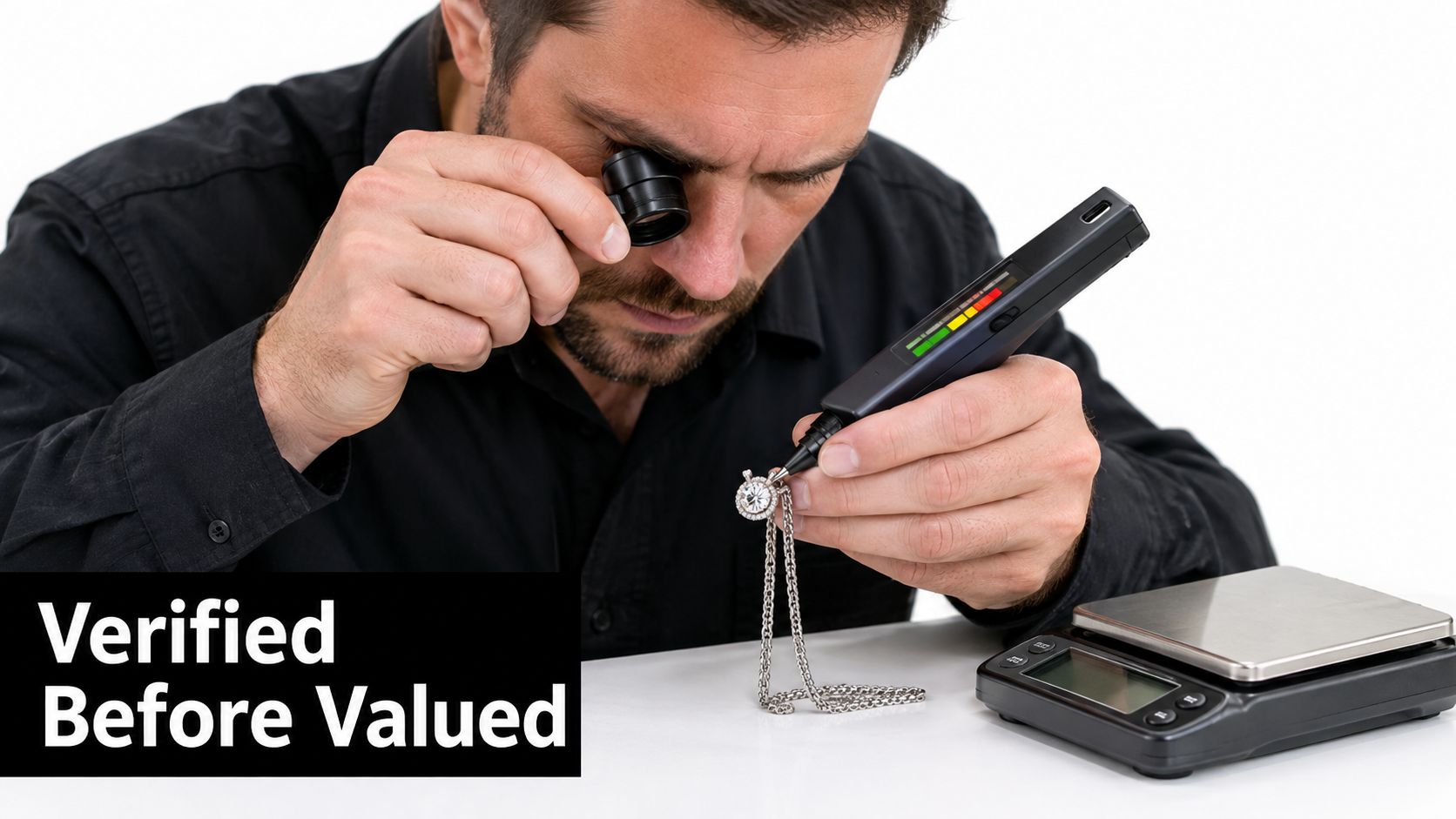
A hallmark is a useful clue, not proof by itself. Stamps can be missing, misleading, or difficult to interpret, and surface testing can miss what's underneath. A responsible evaluation checks the item's construction and material rather than trusting a mark or appearance alone.
Acid testing can provide a quick screening result, but a single surface test may mislead on plated, filled, or mixed-metal pieces. For higher-value jewelry, ask whether the shop can verify the metal at more than one point or use laboratory analysis. If a piece includes stones or other components, ask how the shop separated those from the precious-metal weight. The test locations and the basis for any deductions should be understandable to you.
Match documents to the actual piece
For diamond jewelry, bring the grading report and ask staff to compare its report number and identifying characteristics with the mounted stone. A report that belongs to a different diamond doesn't establish the identity of the one in front of you. Ask whether disclosed treatments have been considered in the evaluation, and whether the diamond is being priced separately from its mounting.
Branded jewelry and luxury accessories call for a different kind of inspection. Serial or identifying marks, construction, materials, and signs of repair may all matter. Idaho Pawn & Gold Exchange says it uses authentication technology for luxury products; buyers can still ask what checks were performed and what documentation comes with the item. Don't accept “it looks right” as the entire explanation for a high-value purchase.
> Ask before you agree: What did you test, what did you weigh, and what does the paperwork say about the item's identity and condition?
Pawn Loan or Outright Sale Which One Fits You
A pawn loan and an outright sale both put money in your hand, but only one leaves you a route to reclaim the jewelry. Choose based on your repayment plan, the item's value to you, and whether you want to keep ownership. Don't compare the offers as if they're two prices for the same deal.
| Decision | Pawn loan | Outright sale |
|---|---|---|
| What happens to ownership | You leave the jewelry as collateral and may reclaim it by meeting the written terms. | You transfer ownership when you accept the purchase offer. |
| What you receive | Cash now, with repayment obligations and any stated charges. | Cash now, with no repayment obligation. |
| What to ask | What's the total amount to reclaim the item, and when is payment due? | How was the offer calculated, and does it account for resale potential? |
| What makes it a fit | You expect to repay on time and want the item back. | You don't expect to reclaim it or prefer a final transaction. |
The loan's key figure isn't only the cash you receive. It's the full amount and deadline required to get your item back. If you're counting on uncertain future income to repay, treat that risk seriously. A short-term loan can be useful, but it can also cost you an item you meant to keep if you don't follow the terms.
An outright sale is cleaner when you've decided you don't want the piece. But don't sell an heirloom, signed design, or diamond with a grading report as scrap without asking whether the shop sees resale value beyond its metal. If you'll regret losing it, pause before accepting either transaction.
> If you expect to reclaim the jewelry and can meet the written repayment terms, ask about a loan. If you don't plan to repay, compare sale offers and treat the sale as final.
A Smart Buyer's Inspection Checklist for the Sales Floor
A low price isn't automatically a bargain. The secondhand luxury market is projected to reach US$360 billion by 2030, with growth of roughly 10% annually, about three times the rate of the firsthand market, according to the FTC notice on jewelry and precious-metals guidance. For a buyer, more resale activity makes careful verification all the more important. A discount doesn't compensate for an item that's misdescribed, repaired without disclosure, or missing important documentation.
Use this checklist at the case:
- Read the description closely. Check that the receipt and any display information match the item's stated metal, karat, weight, condition, and included components.
- Inspect construction. Look at prongs, clasps, links, solder points, and visible signs of repair. Ask staff to show you anything they've repaired or adjusted.
- Check the hallmarks. Treat a karat stamp or brand mark as a prompt for verification, not as proof of authenticity.
- Ask for stone documentation. For a higher-value diamond, request the grading report and confirm that its report number and identifying details match the stone.
- Clarify protections. Ask about the return policy, any layaway terms, and what the shop will do if independent testing later contradicts the written description.
Know when to stop
Pause if the seller can't answer basic questions, the price seems unusually low without a clear explanation, or the paperwork for a valuable stone is missing. Ask who performed any authentication and what evidence supports the description. A shop should be able to explain what it knows, what it tested, and what it can't verify.
FTC guidance says jewelry claims should accurately represent metal type, karat fineness, weight, treatment, quality, and value. The FTC's statement on jewelry guides provides the basis for those disclosure expectations. For you as a Treasure Valley buyer, that means asking for a clear description before paying, not trying to reconstruct the deal after a problem appears.
Negotiating Without Burning the Relationship
Good negotiation starts before you sit down. Sort your pieces, note any hallmarks and documents, and bring a clear idea of whether you're selling, seeking a loan, or buying. Then ask the shop to explain its offer using the same basics you've prepared: tested fineness, net precious-metal weight, any stone deductions, and whether resale value is part of the calculation.
Your room to negotiate depends on what the item is. Generic gold is often priced around its recoverable metal content, with costs and margin built in. A signed vintage ring, branded piece, or diamond with a matching grading report may deserve a closer look as finished jewelry. If you think the shop is overlooking that value, point to the evidence and ask whether it has been considered. Don't demand a premium based only on what you paid at retail.
For a buyer, ask whether the asking price reflects the item's condition, documentation, and any repair work. For a seller, ask whether a loan and an outright purchase produce different terms and why. A calm, specific question gets you further than announcing that another shop “always pays more.”
> The FTC's jewelry guidance calls for accurate representation of metal type, fineness, weight, treatment, quality, and value. Ask the shop to put the item's description and transaction terms in writing before you agree.
Walk away if the testing or pricing remains unexplained, the documentation doesn't match, or staff won't answer reasonable questions. You don't need to turn a conversation into an argument. Take your paperwork, compare another offer if that's practical, and return only if the terms make sense to you.
Caring for Jewelry After You Buy It and Protecting Resale Value
Care starts with knowing what you bought. Gold, silver, pearls, opals, turquoise, and treated stones don't all respond to the same cleaning method. Before using an ultrasonic cleaner or chemical solution, ask whether the stone or setting can tolerate it. Harsh chemicals can damage delicate materials, and abrasive cloths can wear plated surfaces.
For routine care, use a soft cloth and a gentle cleaning method suited to the piece. Don't assume an ultrasonic bath is safe for every stone or setting, especially if a gem has inclusions, treatments, or loose mounting. If you're unsure, ask a jeweler to inspect it before cleaning. Check clasps and prongs occasionally so you can address looseness before a stone falls out.
Store pieces to prevent avoidable damage
Keep jewelry separated so chains don't tangle and harder stones don't scratch softer surfaces. Store silver with an anti-tarnish strip, and keep delicate or moisture-sensitive stones in a stable environment. A little care prevents wear that can affect whether a piece remains attractive as wearable jewelry rather than being valued only for its recoverable material.
Keep the purchase receipt, grading report, authenticity card, and any service records together. If you later bring the item to a shop, that documentation helps staff identify what they're evaluating and whether the piece has value beyond its metal. It doesn't guarantee a higher offer, but it gives the next assessment a stronger starting point.
A sound pawn shop jewelry sale depends on clear descriptions, proper testing, and terms you understand. Whether the piece stays in your jewelry box or returns to a counter someday, protect the paperwork and ask for explanations while the transaction is in front of you.
---
Idaho Pawn & Gold Exchange buys, sells, and evaluates jewelry, diamonds, and precious metals, and offers pawn loans for customers considering a short-term option. Visit Idaho Pawn & Gold Exchange in Boise, Meridian, or Nampa to discuss your piece, review the testing and pricing, and decide whether a loan, sale, or purchase fits your needs.