
The most striking number in luxury resale isn't a discount. It's a gain. In a 2025 resale report, the Hermès Kelly Mini II rose 282% in value, the Sellier Birkin 183% and the Constance 137% (The RealReal 2025 report via Yahoo Finance). Read that against your own receipt and the question changes. The bag in your closet isn't used goods with a sentimental price. It's an asset with a market you can measure.
Most sellers measure the wrong thing. They compare a same-day cash offer against a listing price, feel insulted, and walk away from a deal that was fine. The number that decides the matter is net proceeds, meaning what lands in your account after fees, shipping, cleaning, waiting time and return risk.
Learning how to sell a designer handbag well comes down to five disciplines: build the file, prove the bag, grade the flaws, value the exact model, then compare routes on what each one pays. Do them in that order and the offer stops feeling personal.
Build the Sale File Step by Step
Every bag worth pricing starts as a document, not an object. Dealers run intake before they name a number, because the details decide which comparables apply. A sale file turns a story about a handbag into something a buyer can underwrite, and it takes an afternoon. That file also protects net proceeds. Clear records reduce haggling, repeated questions and late surprises, all of which cost money when you sell privately, through consignment or for cash.
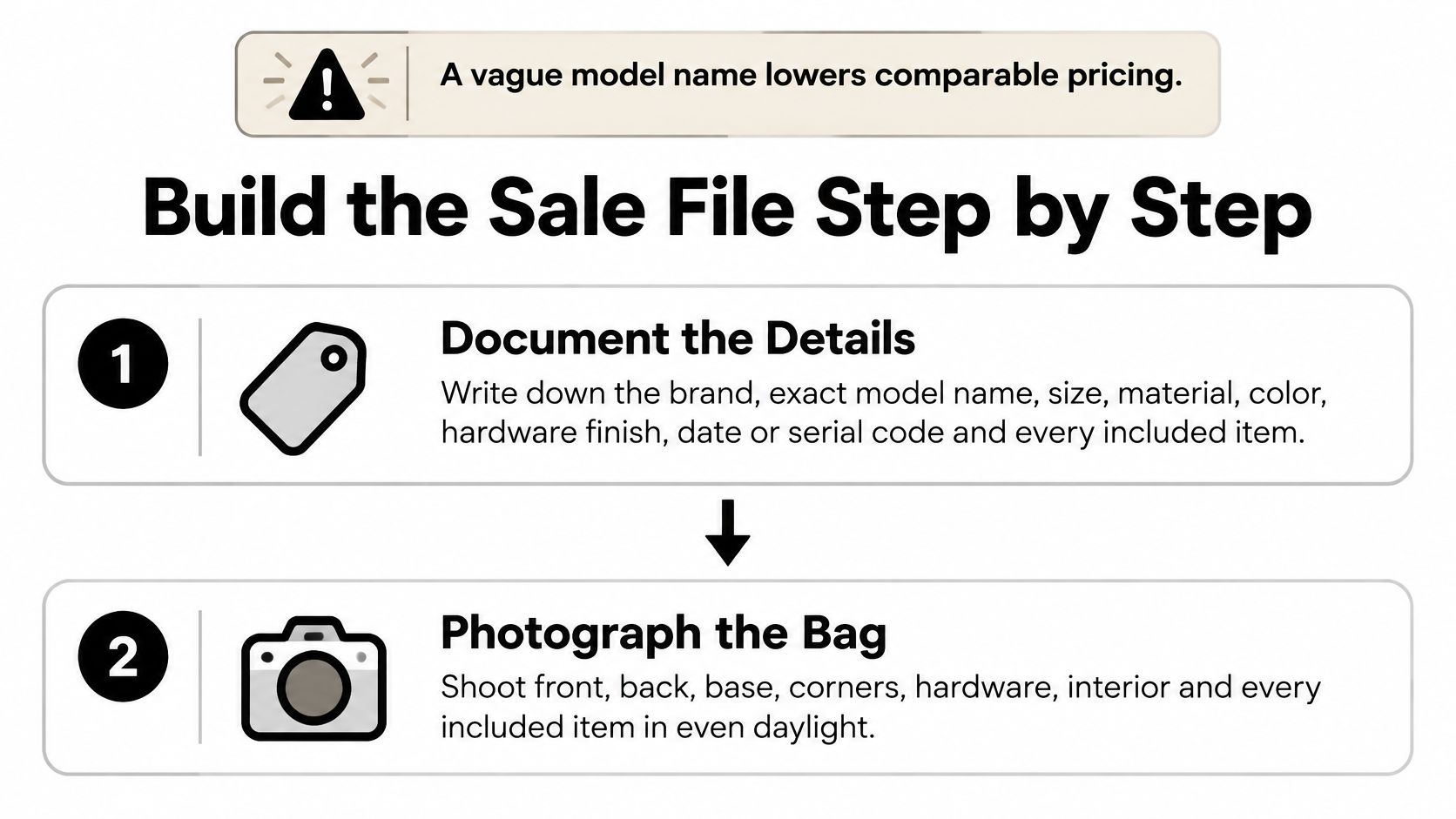
Seven steps, in the order that avoids rework.
- Record the exact identity. Brand, model name, size, material, color, hardware finish, date or serial code, and every included item. "Chanel flap bag" and "Chanel Classic Double Flap, medium, caviar leather, gold hardware" sit in different price bands. A buyer can only match the second one to real sales. Accessories help, but documentation does more work. A bag with clear records is easier to price than one with a dust bag and no history.
- Photograph the bag properly. Front, back, base, corners, handles, interior, hardware engravings, label, code and accessories, on a plain background under one daylight-balanced light. Mixed lighting makes the same bag look like two different colors, and buyers trust the worse photo.
- Measure width, height, depth and strap drop. Shoppers filter by size, so a listing without dimensions gets skipped even when the price is right.
- Log every flaw with a close-up. Corner rub, glazing cracks, stains, odor, tarnish, loose stitching, replacement parts. A defect discovered after payment becomes a dispute. The same defect disclosed up front becomes a price adjustment you control.
- Gather the paper. Receipts, repair invoices, dust bag, box, lock and keys, in one folder instead of four drawers. Add any prior authentication certificate if you have one.
- Redact before you share. Blur card digits and home addresses on any document you photograph. A buyer needs provenance, not your account details.
- Save it as one dated record. One folder, named by date and model. It becomes the version you send to every buyer, platform and authenticator.
> The step people skip: photographing the base and corners. It's the cheapest photo to take and the one buyers zoom in on first.
Documented intake also protects you from your own assumptions. A Brown University capstone studying seven designer brands and resale listings found that brand, material and demand clearly shape resale prices, and also that leather bags averaged a lower resale price than non-leather bags in its sample. Model-level comparables beat rules of thumb like "leather is worth more." The same caution applies to averages. A category number describes a market, not your bag. Build the file first, then choose the route. Cash is faster but usually gives up upside. Consignment can chase a higher price but adds fees, waiting and return risk. Self-selling keeps the most control, yet it also puts documentation, disputes and shipping on you.
Prove Authenticity With Evidence, Not Logo Checks
The authentication advice most sellers read is a list of things to look at: stitch count, logo shape, date code format, packaging. Counterfeiters work from the same list. UK government guidance on buying second-hand with confidence reports that one in four pre-loved clothing buyers unknowingly bought a counterfeit in the previous year, and 17% now restrict purchases to sellers who offer authentication services.
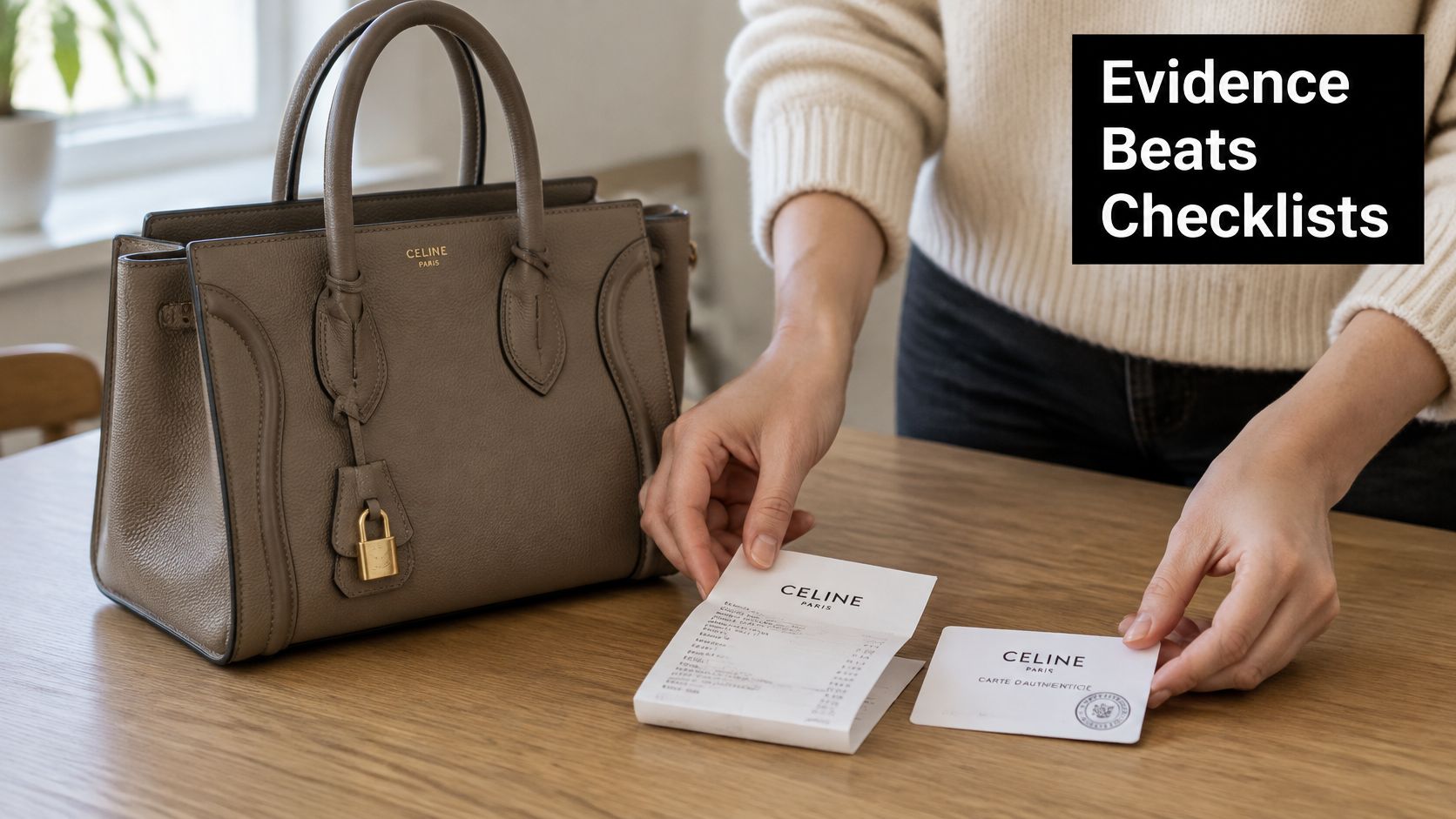
That changes what a seller needs. Not another visual checklist, but an evidence package a stranger can audit.
What the evidence package contains
The raw material is already sitting in your file. The work here is labeling it: what each document proves, and who stands behind the conclusion. A receipt proves where the bag was bought. A repair invoice proves the item existed and was serviced by a named workshop. Neither one proves authenticity on its own.
That's the line most sellers blur. Never write "authentic" as your own verdict unless you can point to who checked it and what they examined. Say "authenticated by [named service], certificate included" or say nothing at all. A buyer who catches an overclaim stops trusting every other detail in the listing.
A real inspection looks at more than just the label.
The contrarian point is worth stating plainly. More accessories do not create more trust. A box and dust bag help a listing look complete, but documentation quality, an independent inspection trail and a clear return or dispute policy move a serious buyer further than the original packaging ever will. Our own luxury handbag authentication process runs on that principle: the bag is checked before a transaction, and the finding is available to both sides.
If a buyer or a store rejects the bag after inspection, don't argue in the abstract. Send the file, add close-ups of the date stamp, the stitching at the handle roots and the hardware engraving, and offer a specialist recheck. Records in hand beat indignation every time.
Grade Condition and Price Each Flaw
Condition is the lever sellers control most and describe worst. Four grades do the job, and the discipline is applying the same grade to the same wear pattern every time.
| Grade | What It Means | Pricing Effect |
| --- | --- | --- |
| Pristine | Like new, no visible wear, original structure intact | Top of the model's price range |
| Excellent | Light use, minor edge wear, clean interior | Near the top; deduct for each visible flaw |
| Very good | Visible corner rub or hardware wear, structure intact | Mid-range; disclose and photograph every mark |
| Fair | Heavy wear, glazing cracks, odor, stains or tarnish | Lower; often sold as an entry-level or restoration piece |
A grade isn't a courtesy label. Vogue's report on visibly used bags in resale notes that demand for fair-condition bags doubled once platforms widened their acceptance, while fair-condition examples still sold about 33% below better-condition items, with 60% of that segment made up of heritage luxury brands. Worn inventory sells. It sells cheaper.
> Disclosure rule: every flaw gets its own close-up and a plain noun. "Corner rub on the front right base" beats "minor wear" every time.
So don't reject visibly worn inventory automatically. Price it as an entry-level or restoration opportunity, and reserve the top of the range for clean interiors, intact structure, unworn hardware, dust bag, box, receipt and provenance.
Build the listing around a technical specification sheet, authentication status, measurements, material, included items, condition grade and return terms. The principal pitfall is overclaiming authenticity or condition. One undisclosed defect can trigger a return, a payment dispute, reputational damage and lost margin, even when the first sale price looked strong.
Value the Exact Model With Completed Sales
A Chanel flap bag and a Chanel tote carry the same brand name and wildly different resale numbers. Brand-level averages feel useful and price nothing. In Rebag's 2024 Clair analysis, value retention looked like this.
| Brand | Retention of retail | How to Use It |
| --- | --- | --- |
| Goyard | 104% | Above retail; a benchmark for this brand, not a promise |
| Chanel | 92% | Strong retention; compare the exact model first |
| Louis Vuitton | 88% | Lower retention; net proceeds still depend on fees |
Read 100% carefully. It means the observed resale price roughly matched the original retail benchmark before transaction costs, not that the seller kept the whole amount after fees, shipping, taxes or preparation. The same analysis classified only brands retaining more than 85% as "unicorns," which tells you how unusual strong retention is. Individual models also break away from their brand averages in both directions, and some popular models retain well above their retail price. Check the exact model's completed sales before assuming a brand benchmark applies to your bag.
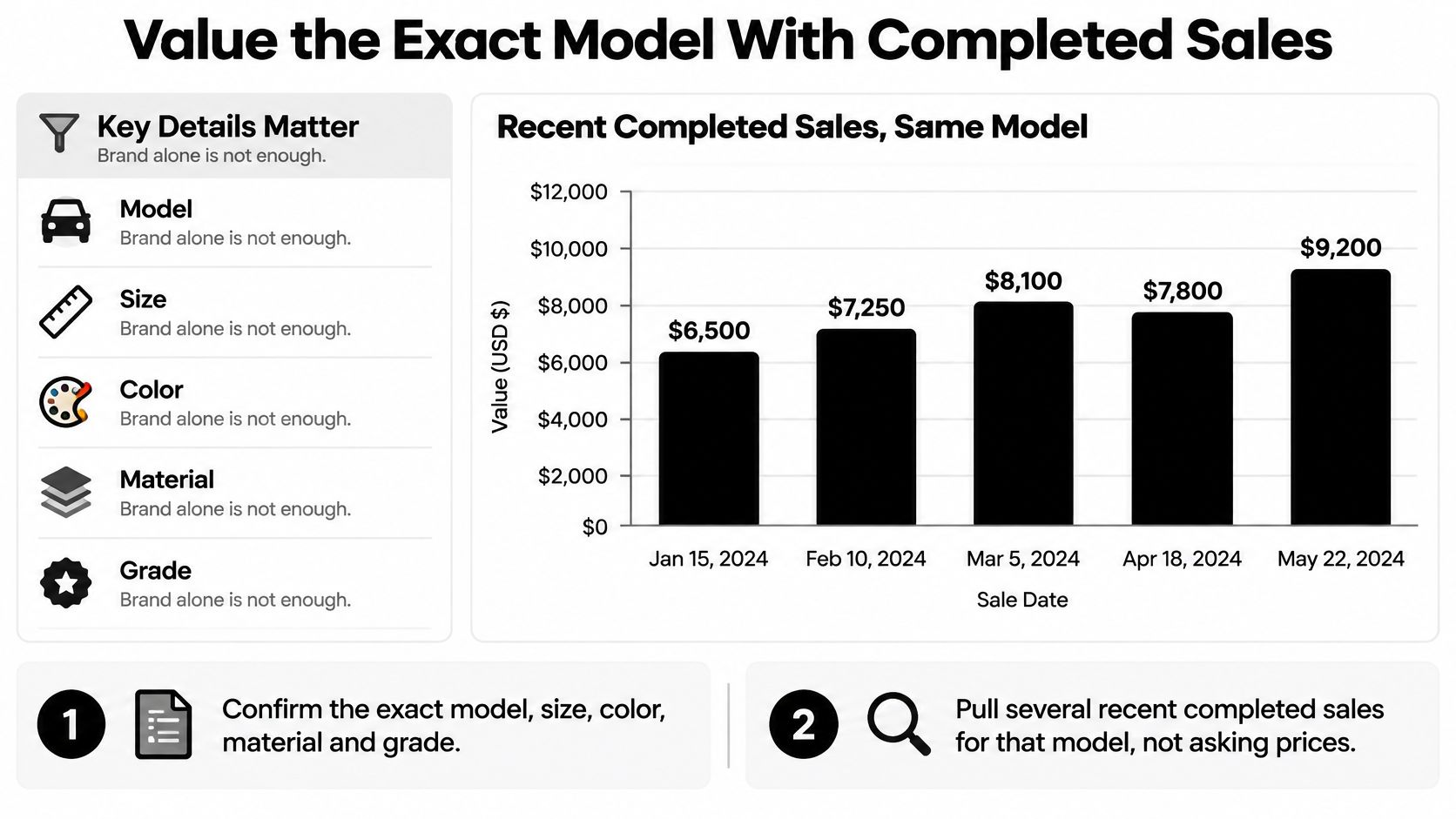
From sale price to net proceeds
- Confirm the exact config. Model, size, color, material and grade. A half-size difference can move a bag into a different comparable set.
- Pull several recent completed sales for that model, not the active asking prices. Asking prices are wishes with photos.
- Keep six numbers apart. Retail price, current asking price, historical resale price, retention percentage, gross sale price and net proceeds. Retail Boss's breakdown of resale value metrics makes the point that sellers who mix them always feel shortchanged.
- Use retention as a ceiling check, not a forecast. If your model sits near its brand's benchmark, you're probably in the right band.
- Subtract the full costs. Platform fees, shipping, insurance, cleaning, repair and a reserve for returns come off the gross figure.
- Set a minimum acceptable offer from the net figure, not from the listing price.
That last step is where most sellers go wrong. A $2,000 gross sale at a 20% platform fee, minus shipping and a cleaning bill, can net less than a $1,600 direct offer with no costs attached. The gross number is marketing. The net number is money.
Documentation moves the net figure more than accessories alone. A receipt and authentication paperwork don't just add a few dollars to the comparable set; they pull your bag out of the "unverified" discount tier entirely, where buyers price in the risk that the bag fails inspection. A dust bag without proof of purchase rarely does that. So when you pull completed sales, separate the listings sold with full documentation from the ones sold on photos and a promise, and comp against the group your file matches.
A lower offer can be the right one when the net gap is small and speed has value. The habit of grading before pricing carries into other categories too, which is why these tips for selling a diamond start with the same instruction: measure the item before you measure the market.
Fix Problems Before a Buyer Walks Away
The most common ending to a handbag sale isn't a rejection. It's a low offer the seller takes badly. Almost every problem that surfaces at the end started earlier, in a photo, a measurement or a sentence nobody wrote.
| Symptom | Likely Cause | Fix |
| --- | --- | --- |
| Offer far below expectations | Comparables don't match model, size or grade | Re-check the model and grade; bring the receipt and dust bag |
| Buyer rejects after authentication | Unclear photos or doubt that never got answered | Send hardware and stitching close-ups; get an independent authentication |
| Buyer reports an undisclosed defect | Flaw missing from the listing | Photograph every mark and confirm condition in writing before the sale |
| Payment or shipping dispute | No tracking or insurance | Use signature delivery and insured shipping, and keep every record |
Minutes versus specialists
Some fixes take ten minutes. Re-shooting the corners, resending the receipt, correcting the model name in a listing, restating the grade in plain words. Do those before you re-list, because a second listing with better photos usually attracts the buyer the first one deserved.
Others need a specialist and a small budget. A re-authentication on a contested bag, a repair estimate for cracked glazing, odor treatment on a lining. Get the quote before you promise anything to a buyer.
Compare Routes on Net Proceeds and Request a Quote
The decision rule is short. If you need the money this week, take a quote from a local buyer and accept that certainty costs something. If the bag is in demand and you can wait, run your net figures on consignment or a platform before committing to anything.
| Route | Typical Payout | Time to Cash | Cost to You | Best For |
| --- | --- | --- | --- | --- |
| Pawn shop or direct buy | Cash offer, usually below expected resale | Same day | No selling fee; the offer already carries the buyer's margin | Speed and certainty |
| Consignment store | Your share of the final sale price | Weeks to months | Store commission taken from the sale price, fixed in the agreement | Sellers who can wait for a higher price |
| Online resale platform | Sale price minus fees and shipping | Days to weeks | Platform fee, shipping and authentication charges | Sellers comfortable with photos and buyer messages |
| Private sale | Highest gross price if the right buyer appears | Days to weeks | Your time, payment risk and fraud checks | Sought-after models with clear demand |
Rank the routes by net proceeds and a private sale of a sought-after model usually comes first, a platform second and a same-day cash offer last. Rank them by certainty and the order flips.
A cash offer looks low beside a listing price because the buyer's margin, authentication cost and resale risk are already inside it. That's the same reason Chanel, Prada, Gucci and Louis Vuitton bags turn up at bargain prices in pawn shops. The shop bought at a price that let it resell, and the seller got paid the day they walked in.
Asking for a quote
- Send photos before you travel. A store can give you a range from a few clear shots, which saves a trip when the number won't work.
- Bring everything that came with the bag. Dust bag, box, receipt, repair records, strap, lock and keys. Call ahead for anything unusual or large.
- Expect an in-person evaluation. Authentication checks happen before money changes hands, and you decide whether to accept the offer.
- Compare the quote with your written net figures. A gap of a few dollars is worth the certainty; a gap of a few hundred deserves a second route.
At Idaho Pawn & Gold Exchange, that's how the process runs: send photos for a quote, then bring the bag in for an in-person evaluation at the Boise, Meridian or Nampa store, and you decide whether to accept.
Before you go anywhere, pack the bag, dust bag, box, receipt and repair records, and write one estimated net figure per route so the decision is already made.
---
Idaho Pawn & Gold Exchange buys designer handbags in Boise, Meridian and Nampa, with luxury authentication completed before any transaction and a quote you can start from photos. Bring the bag, the dust bag, the receipt and whatever paperwork you have, and you'll get an in-person evaluation with no obligation to accept. Visit Idaho Pawn & Gold Exchange to start the conversation.