
An 18-volt battery is a power tool energy source with 18 volts of nominal output, commonly using lithium-ion, NiCd, or NiMH chemistry. Proper evaluation requires checking the tool platform, capacity retention, and physical safety, not just the voltage printed on the case.
You're standing at a pawn counter with a clean-looking battery in your hand. The terminals are bright, the plastic isn't scratched, and the label says 18V, so the deal appears obvious. Then you fit it to your drill, make a few cuts, or drive a handful of screws, and the pack fades almost immediately.
That battery may still show a healthy reading at rest. It may even display a full charge on its indicator. Neither fact proves that it retains useful capacity under real work. In the secondhand market, the buyer who checks platform, model number, charging behavior, and runtime usually gets the better deal, while the buyer who pays for appearance alone can inherit a worn-out pack.
Finding Your Next 18 Volt Battery at a Pawn Shop
A nearly new-looking battery can be the least obvious bargain on the shelf. The housing may have spent most of its life in a drawer, exposed to heat, or connected to a charger that wasn't designed for it. Cosmetic condition tells you how the outside looks today. It doesn't tell you how the cells behave when a tool demands current.
Start with the tool platform, not the price. An 18-volt Makita pack belongs to a specific battery and charger family, just as an 18-volt DeWalt or Milwaukee pack does. The printed voltage is only one part of the transaction. Check the brand, exact model or part number, connector shape, locking mechanism, and the charger you already own.
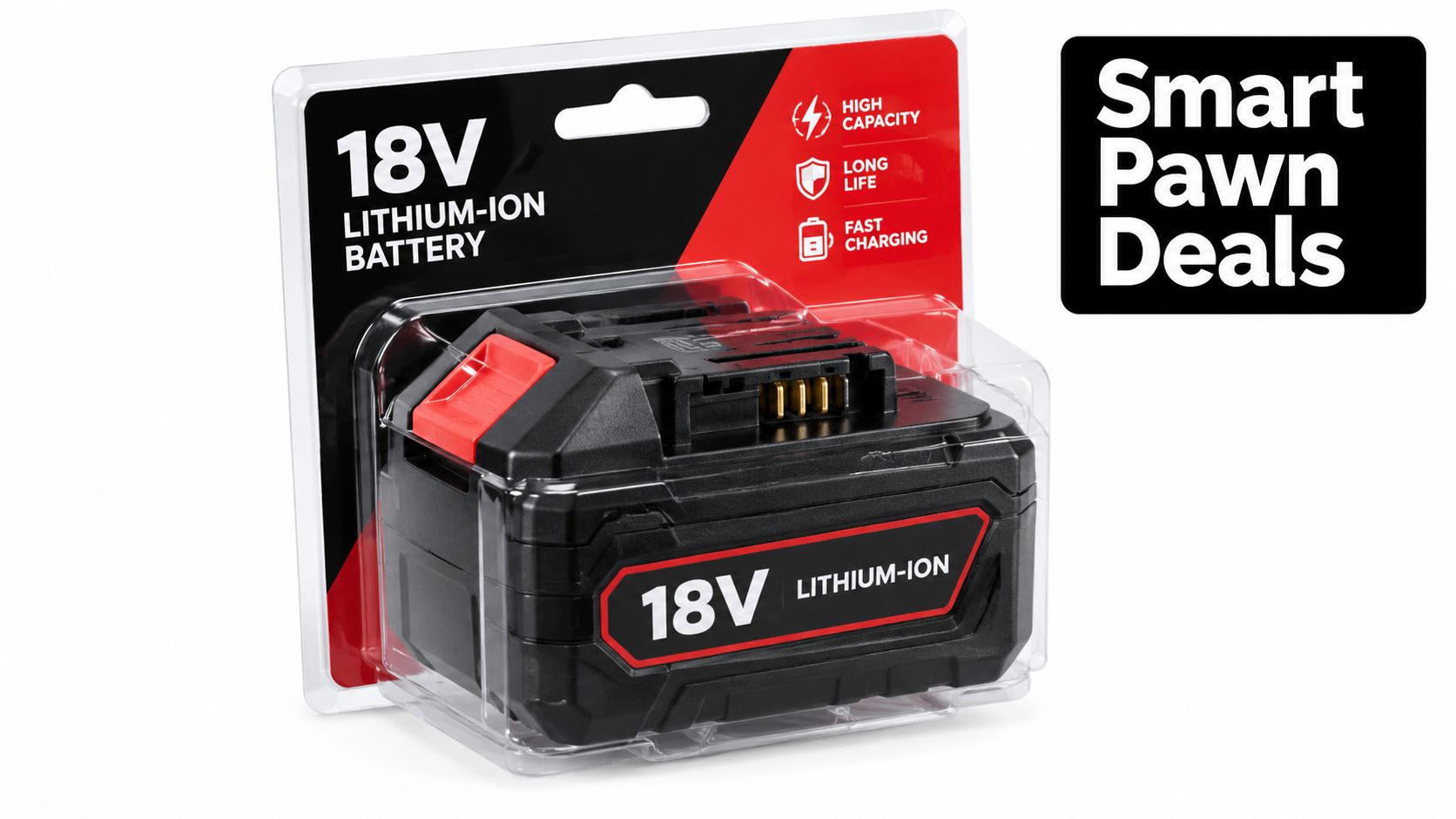
!A brand new 18V lithium-ion power tool battery inside its retail blister pack packaging on white.
The five-minute inspection
Before you negotiate, turn the pack over and inspect it under good light.
- Housing: Look for cracks, punctures, crushed corners, melted plastic, burn marks, or gaps around the seams.
- Battery label: Record the manufacturer, model number, chemistry marking, and capacity marking. A vague “compatible” label deserves more scrutiny than a clearly identified platform pack.
- Terminals: Check for corrosion, bent contacts, contamination, or signs that the pack has overheated.
- Fit: If the shop has a matching tool and charger, confirm that the battery locks securely and is recognized normally.
- History: Ask whether the pack was tested, whether it accepts a charge, and whether the seller can demonstrate useful runtime.
A short demonstration is better than a voltage reading alone. A battery that powers a tool briefly may have materially reduced capacity even when its indicator says full. The contrarian lesson is simple: a worn case with verified runtime can be a better purchase than a pristine case with unknown capacity.
Understanding 18 Volt Battery Basics and Chemistry
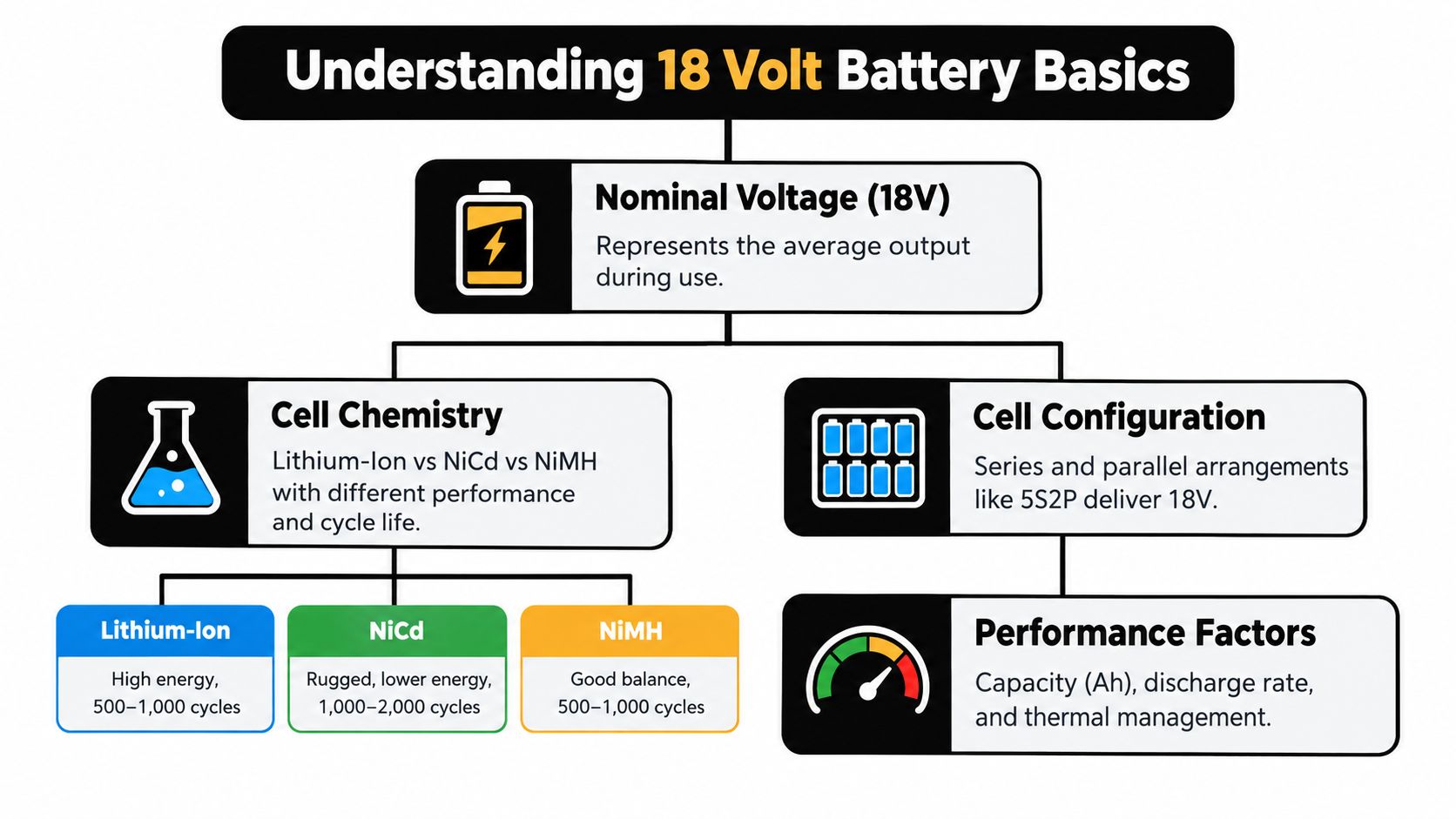
The 18-volt designation describes nominal voltage, which is a practical label for the pack's expected operating level rather than a promise that a meter will display the same figure at every moment. Voltage changes during charging, resting, and tool use. It also varies with cell chemistry, internal resistance, temperature, and the load placed on the motor.
That distinction matters because two packs carrying the same voltage label can behave very differently. One may run a drill steadily, while another may sag quickly under a saw or impact driver. The pack's usable performance depends on more than the number printed on the front.
What the chemistry changes
Lithium-ion packs are common in current cordless tool platforms because they offer strong energy density and avoid the traditional memory-effect concern associated with nickel-based packs. Bosch describes lithium-ion's role in cordless tools and specifically identifies the absence of memory effect as one of its advantages in its history of cordless power tools. These packs also depend on electronic controls, so the battery and charger must communicate correctly.
Nickel-cadmium packs have a different maintenance profile and can be found in older tools. Their age, storage history, and previous charging habits are important clues. A pack from an older platform may be difficult to replace, even if the tool itself still works well.
Nickel-metal hydride packs sit between older nickel-cadmium designs and modern lithium-ion systems in many users' experience. They require evaluation on their own terms, including the correct charger and realistic expectations for remaining capacity.
Read the label as a system
Capacity markings, often expressed in ampere-hours, help compare packs within a compatible platform, but they don't replace a runtime test. Cell arrangement, discharge capability, thermal management, and the tool's workload all affect what you experience in the workshop. A high-capacity pack can still be a poor buy if its cells are degraded or its protection electronics reject charging.
Treat the battery as part of a system. The cells, casing, terminals, charger, and tool firmware must work together. Voltage gets you into the right conversation, but it doesn't finish the inspection.
Comparing Li-ion NiCd and NiMH Battery Types
Chemistry affects weight, charging behavior, storage, age-related risk, and replacement value. It also tells you which questions to ask before buying. A used pack shouldn't be judged by the same standard as a newer pack from a different chemistry.
| Chemistry | Energy Density | Memory Effect | Temperature Range | Lifespan Cycles | Cost Range |
|---|---|---|---|---|---|
| Lithium-ion | Generally high for cordless tools | Low concern compared with nickel-based designs | Temperature-sensitive, especially during charging | Depends heavily on cells, controls, storage, and workload | Varies by platform and condition |
| NiCd | Lower than modern lithium-ion designs | More relevant to maintenance and charging history | Often valued for tolerance in demanding conditions | Depends on age, discharge habits, and cell condition | Often influenced by tool age and availability |
| NiMH | Between older NiCd and many lithium-ion designs in practical use | Can still be affected by charging habits | Requires appropriate charging and storage care | Depends on age, charger, and previous use | Varies with platform rarity and replacement supply |
Lithium-ion
For most current cordless tool buyers, lithium-ion is the easiest chemistry to live with when the pack, tool, and charger belong to the same platform. It tends to deliver a compact package and convenient everyday operation. The trade-off is that the protection electronics and cells must remain healthy, and a damaged pack should never be treated as an ordinary used accessory.
NiCd
NiCd batteries can make sense when you're preserving an older drill, saw, or garden tool and have a reliable supply of compatible packs. Their resale value may come from platform usefulness rather than modern performance. Inspect them for leakage, cracked cases, poor charging response, and evidence that the seller is pairing them with the correct charger.
NiMH
NiMH packs deserve a careful capacity check because age and storage can matter more than appearance. They may be the only practical replacement for a discontinued tool, but rarity isn't proof of quality. If a pack is hard to replace, confirm performance before assigning it a premium.
> Mechanic's rule: Chemistry tells you what behavior to expect. The charge test tells you what condition you actually bought.
Checking Tool Compatibility and Battery Form Factors
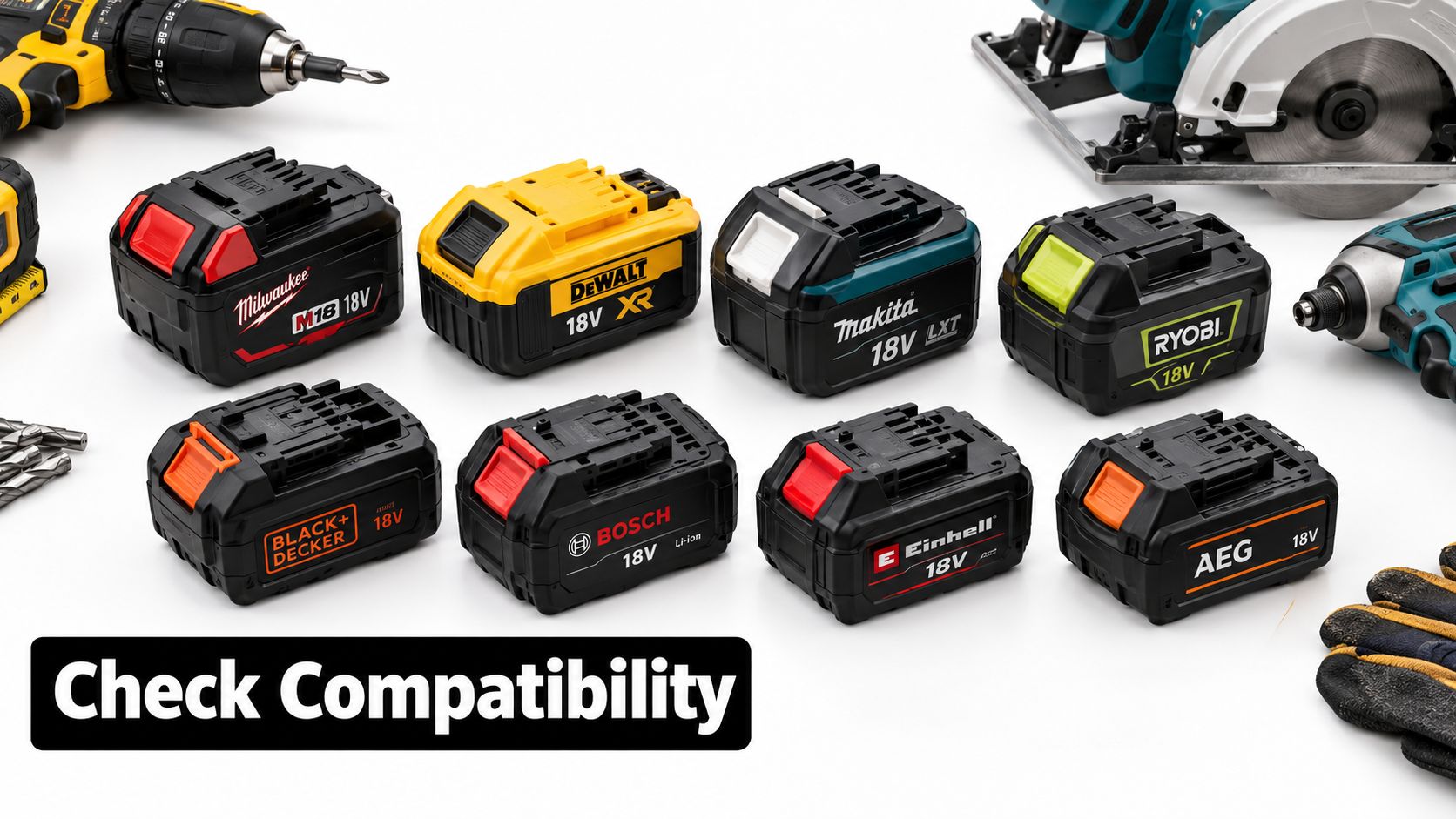
An 18-volt battery isn't automatically compatible with every 18-volt tool. Manufacturers use different rails, terminals, physical guides, locking tabs, and electronic communication systems. Even packs from the same brand may belong to separate generations or platforms.
Take the tool model number and battery part number seriously. Search the manufacturer's compatibility information, compare the connector layout, and don't rely on a photograph that merely looks similar. An adapter may change the physical fit, but it doesn't necessarily reproduce the communication or protection behavior expected by the tool.
Match the whole platform
A proper compatibility check includes:
- Tool model: Confirm the pack is intended for that exact tool family.
- Charger model: Use the charger specified for the battery chemistry and platform.
- Mechanical fit: Make sure the pack slides in fully and locks without excessive force.
- Electrical contacts: Look for corrosion, contamination, bent terminals, or damaged guides.
- Tool response: Test whether the tool starts normally and whether its battery indicator behaves as expected.
A pack that fits loosely can interrupt power under vibration. One that fits but triggers an error may have a communication mismatch or a protection fault. Don't force a battery into a tool, and don't bypass a protection circuit to make an uncertain combination work.
The following demonstration can help you recognize why physical fit and platform design matter, but it shouldn't replace the manufacturer's compatibility information or an actual test with your tool.
<iframe width="100%" style="aspect-ratio: 16 / 9;" src="https://www.youtube.com/embed/MMssklzoBAk" frameborder="0" allow="autoplay; encrypted-media" allowfullscreen></iframe>
If you're buying for resale, record the exact platform in the listing. “18V battery” is too vague. “Battery for a specified Makita 18V platform,” with the model number and tested charger behavior, gives the next buyer information they can verify.
Testing Battery Condition and Identifying Red Flags
A resting voltage check is a starting point, not a capacity test. A pack can show a plausible reading with little useful energy left inside. The practical question is whether it accepts a normal charge, holds that charge, and continues to power the intended tool without rapid drop-off or abnormal heat.
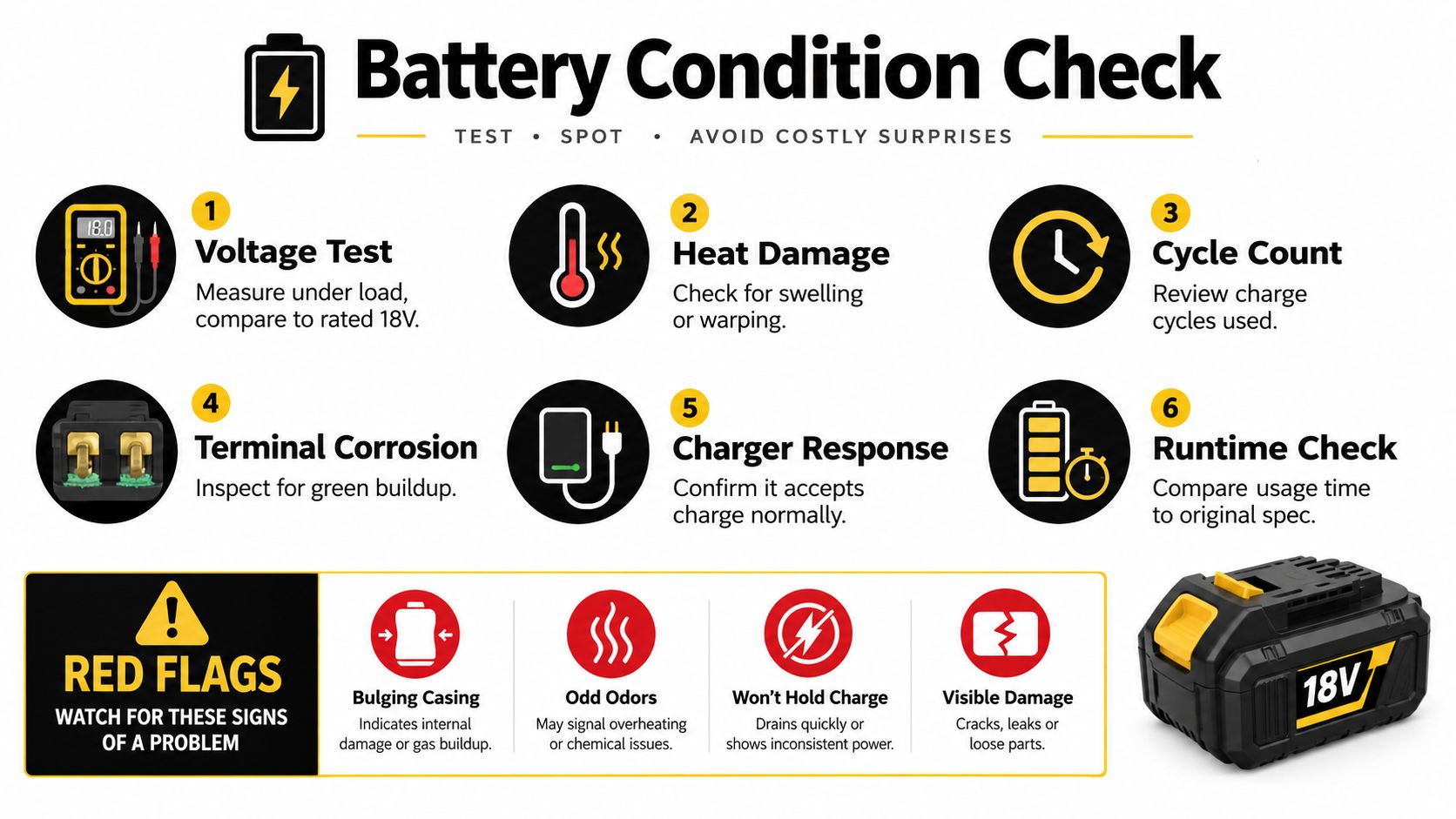
Begin with a visual inspection before connecting anything. Reject a pack with a punctured or crushed housing, swelling, heat damage, melted plastic, an unexplained burning odor, or badly corroded terminals. Don't charge a battery that has been involved in an impact if the case or cells may be compromised.
A practical inspection sequence
1. Identify the pack. Photograph the label and confirm its model, chemistry, platform, and capacity marking.
2. Check the case. Run your fingers around the housing without pressing on a swollen area. Look for distortion, cracks, punctures, and heat marks.
3. Inspect the terminals. Green buildup, blackening, looseness, or damaged contacts can create resistance and unreliable tool operation.
4. Test charging. Use the correct charger and observe whether it accepts the pack normally. Unusual sounds, smell, heat, or immediate fault indications are reasons to stop.
5. Measure under use. If the seller permits it, operate the matching tool under a repeatable light-to-moderate task. Watch for immediate power loss, pulsing, or a sharp reduction in performance.
6. Check useful runtime. Compare the result with a known-good pack in the same tool and task. A full indicator isn't proof that the battery can sustain work.
Separate wear from danger
Scratches, dust, faded labels, and ordinary scuffs are cosmetic. A bulging casing, puncture, crushed shell, heat damage, unexplained inability to charge, or strong odor is a safety red flag. Don't resell or charge a pack with those conditions.
The U.S. Environmental Protection Agency's guidance on used lithium-ion batteries states that most discarded lithium-ion batteries are likely to become hazardous waste because they may be ignitable and reactive. The agency recommends keeping them out of household trash and curbside recycling, so a damaged pack needs proper battery or hazardous-waste handling rather than a casual resale listing.
Evaluating Pawn Shop Battery Value and Resale Potential
Used battery value comes from verified usefulness, not from the voltage label alone. A buyer is paying for a compatible platform, dependable charging, remaining capacity, safe physical condition, and a reasonable path to replacement if the pack fails.
Start with replacement reality. Compare the used pack with the current cost of a compatible new battery, but don't treat that comparison as a fixed formula. A discontinued platform may attract buyers who need a working replacement, while a common platform may have more competing inventory. Brand recognition can help, but only when the battery is genuine, correctly identified, and tested.
What changes the negotiation
A seller should be ready to document:
- Exact identity: Brand, model number, chemistry, and capacity marking.
- Compatibility: The tool families and charger models that accept the pack.
- Condition: Clear photographs of the case, terminals, label, and locking rails.
- Performance: Whether the battery accepts a normal charge and powers a matching tool.
- Included items: Original packaging, charger, tool, or instructions, if present.
- Known limitations: Reduced runtime, cosmetic damage, discontinued platform, or missing test history.
A buyer should discount uncertainty. If the seller can't demonstrate charging or runtime, treat the pack as unverified rather than assuming it works. Original packaging may improve confidence, but it doesn't restore worn cells. Conversely, a scuffed battery with a recorded platform and repeatable runtime may deserve more consideration than a sealed-looking pack with no history.
For pawn transactions, the cleanest valuation conversation is specific. Ask what was tested, with which charger, on which tool, and for how long. If the answer is vague, negotiate around the risk or walk away.
Maintaining and Charging 18 Volt Batteries Safely
Maintenance affects both workshop reliability and resale credibility. A battery that has been stored carelessly may look fine but arrive with reduced capacity, corrosion, or charging problems. Good care won't reverse cell wear, but it can prevent avoidable damage.
Use the charger intended for the battery platform and chemistry. A generic charger may lack the correct controls for the pack's protection system. Keep the terminals clean and dry, and don't scrape aggressively at plated contacts or use a damaged charger lead.
Storage habits that protect value
Store batteries in a cool, dry place away from heat sources, moisture, metal objects, and flammable materials. Avoid leaving a pack exposed to extreme temperatures, especially during charging. If a battery becomes unusually hot, swells, smells strange, or changes shape, disconnect it when safe to do so and stop using it.
A seller who knows the storage and charging history can answer questions that build trust. A buyer should ask whether the battery sat unused, whether it was charged with the correct equipment, and whether it has recently powered the intended tool. “It worked the last time I saw it” is weaker evidence than a current, supervised test.
Maintenance and resale are connected
Clean labeling, intact rails, and a documented test make a pack easier to evaluate. Don't hide scuffs or claim original runtime without evidence. Describe cosmetic wear separately from functional condition, and state clearly if capacity hasn't been measured.
Never put a questionable lithium-ion pack in household trash or curbside recycling. Follow the disposal guidance described earlier and use an appropriate battery collection route. Safe handling protects the next owner and keeps a low-value sale from becoming a preventable hazard.
Making Smart Decisions When Buying Used Power Tool Batteries
The safest purchase starts before you enter the shop. Write down the tool's brand, model, platform, battery part number, chemistry, and charger model. That list prevents the common mistake of buying a battery because “18V” appears on both labels.
Use a simple decision filter:
1. Compatibility first. If the platform or charger match is uncertain, don't buy until you can verify it.
2. Safety second. Reject swelling, punctures, crushed housings, heat damage, strong odors, and unexplained charging failure.
3. Performance third. Request a charge and runtime demonstration with the intended tool.
4. Value last. Compare the tested condition with the cost and availability of a compatible replacement.
Don't let a low price pressure you into accepting an unsafe pack. A battery that cannot be charged normally isn't a bargain, and a pack with severely reduced runtime should be priced as a limited-use item, not as an equivalent replacement for a healthy battery.
For sellers, accurate listings reduce returns and arguments. Show the model label, state the chemistry and capacity marking, name compatible platforms, and describe the actual test performed. If the pack hasn't been tested, say so plainly. Transparency may narrow the buyer pool, but it gives serious buyers a basis for a fair decision.
The best secondhand deal is not necessarily the cleanest battery or the cheapest listing. It's the pack with a known platform, safe housing, normal charging behavior, and useful capacity that matches the buyer's tool and workload.
---
Idaho Pawn & Gold Exchange buys, sells, trades, and accepts newer name-brand battery-powered tools, including tools supplied with 18V batteries. Bring your tool or battery details for a practical compatibility and condition discussion, and visit Idaho Pawn & Gold Exchange to explore current options in Boise, Meridian, or Nampa.