
You're standing at a kitchen table in Boise, Meridian, or Nampa with a ring box open in front of you. The band is stamped 14k, it belonged to family, and you don't know if it's worth keeping in a drawer, insuring, or turning into cash. That decision starts with testing what's there, not guessing from the stamp.
What a 14k Keepsake Ring Really Is
A woman from the Treasure Valley brought in her mother's ring last spring. She wasn't ready to sell it. She just wanted someone to tell her, straight, whether the 14k keepsake ring she inherited was solid gold, whether the small stone mattered, and whether wearing it daily would wreck it. That's the most common starting point I see. Not greed. Uncertainty.
A keepsake ring isn't a technical jewelry category. It's a ring kept because of who wore it, who gave it, or what it marks. A wedding band, a mother's ring with birthstones, a fingerprint band, a signet engraved inside. The sentimental label doesn't change how a buyer prices it, but it changes what you should do with it. Buyers pay for tested metal, weight, stones, and resale demand. Families keep rings for reasons that don't show up on a scale.
The Questions That Actually Matter
Before you decide, you need five answers. Is the metal really 14k? Is the ring solid, plated, or hollow? Are the stones natural, synthetic, or glass? What's the condition of the prongs, shank, and finish? And do you want cash now, cash with a chance to get it back, or no cash at all?
If you can answer those, the keep, insure, redesign, pawn, or sell choice gets much simpler. If you can't, any quote you hear is just a number without context. Get the ring identified first. Then decide what its story is worth to you versus what its gold is worth to a buyer.
Understanding 14k Gold and Its Hallmarks
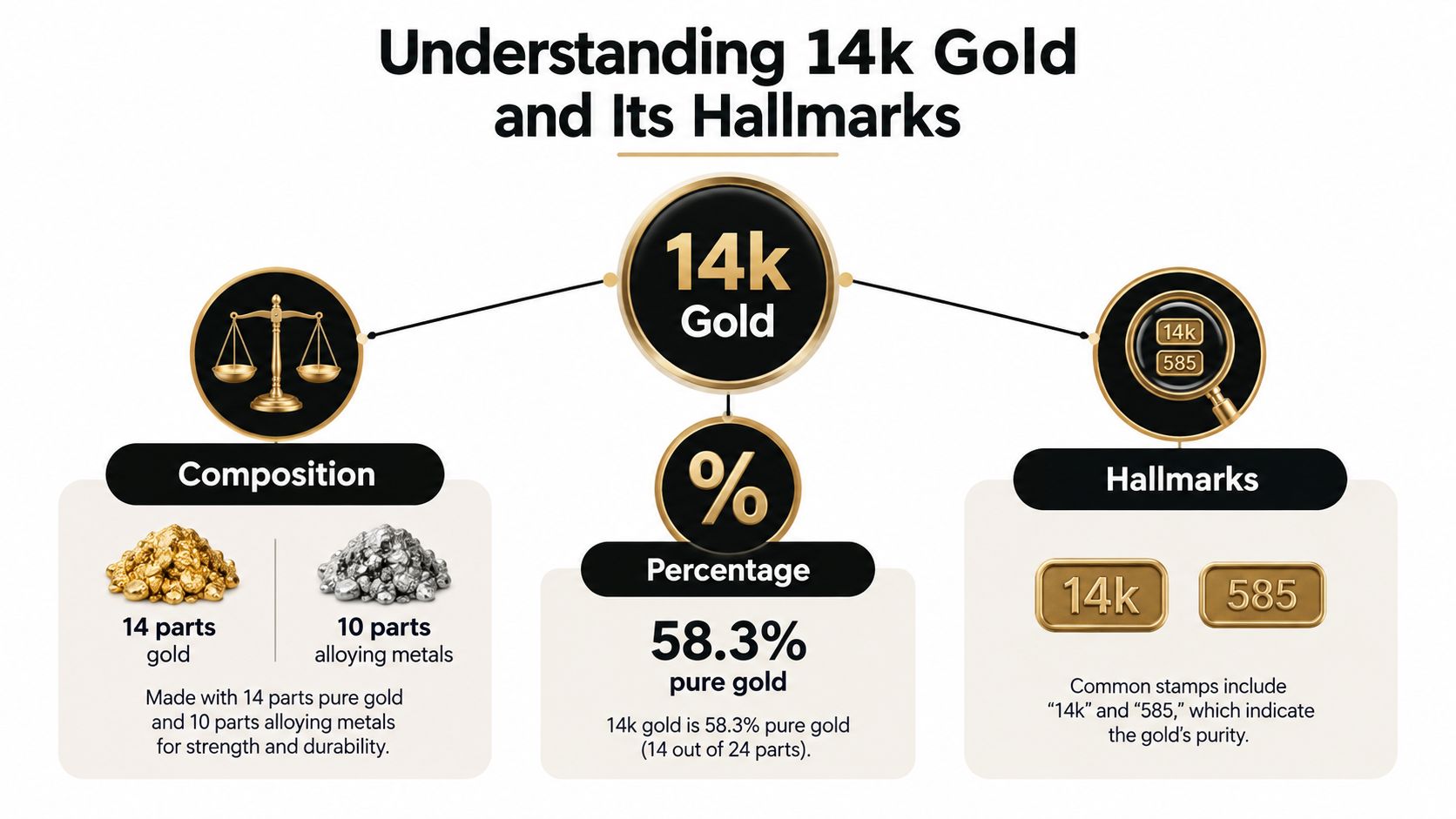
Start with the math, because every quote builds on it. A 14k ring contains 14 parts gold and 10 parts alloying metals by weight, which is approximately 58.3% pure gold, as explained in the Federal Trade Commission guide to buying platinum, gold, and silver jewelry. That's a composition specification. It isn't a statement of total value, and it doesn't tell you what the other metals are.
The alloy portion does the practical work. It controls hardness, color, corrosion behavior, and skin response. Pure 24k gold is relatively soft, so a ring made from it would bend and scratch easily under daily handling. Alloying makes a keepsake ring tougher. Yellow, white, and rose gold all start from that same 14k fineness, but different alloy mixes produce the color and wear characteristics you see.
This visual breaks down how composition, percentage, and stamps fit together.
Reading the Stamps Inside the Band
Look inside the shank with a loupe or phone macro lens. You'll usually find 14K, 14k, or 585, which is the European fineness equivalent. Next to it there may be a maker's registered trademark or responsibility mark. Note both marks, not just the karat stamp.
> A 14k stamp tells you what the maker claimed the alloy should be. Testing tells you whether the ring in your hand matches that claim.
Treat the stamp as a starting point. Stamps can be worn, misread, placed on a replaced shank, or wrong on plated costume pieces. A clear mark helps a buyer choose the right test. It doesn't replace the test.
Identifying and Authenticating a Keepsake Ring
Authentication works in layers. We don't start with acid. We start by looking, because wear patterns and construction often answer half the question before any tester touches the metal.
This checklist shows the order most buyers follow at the counter.
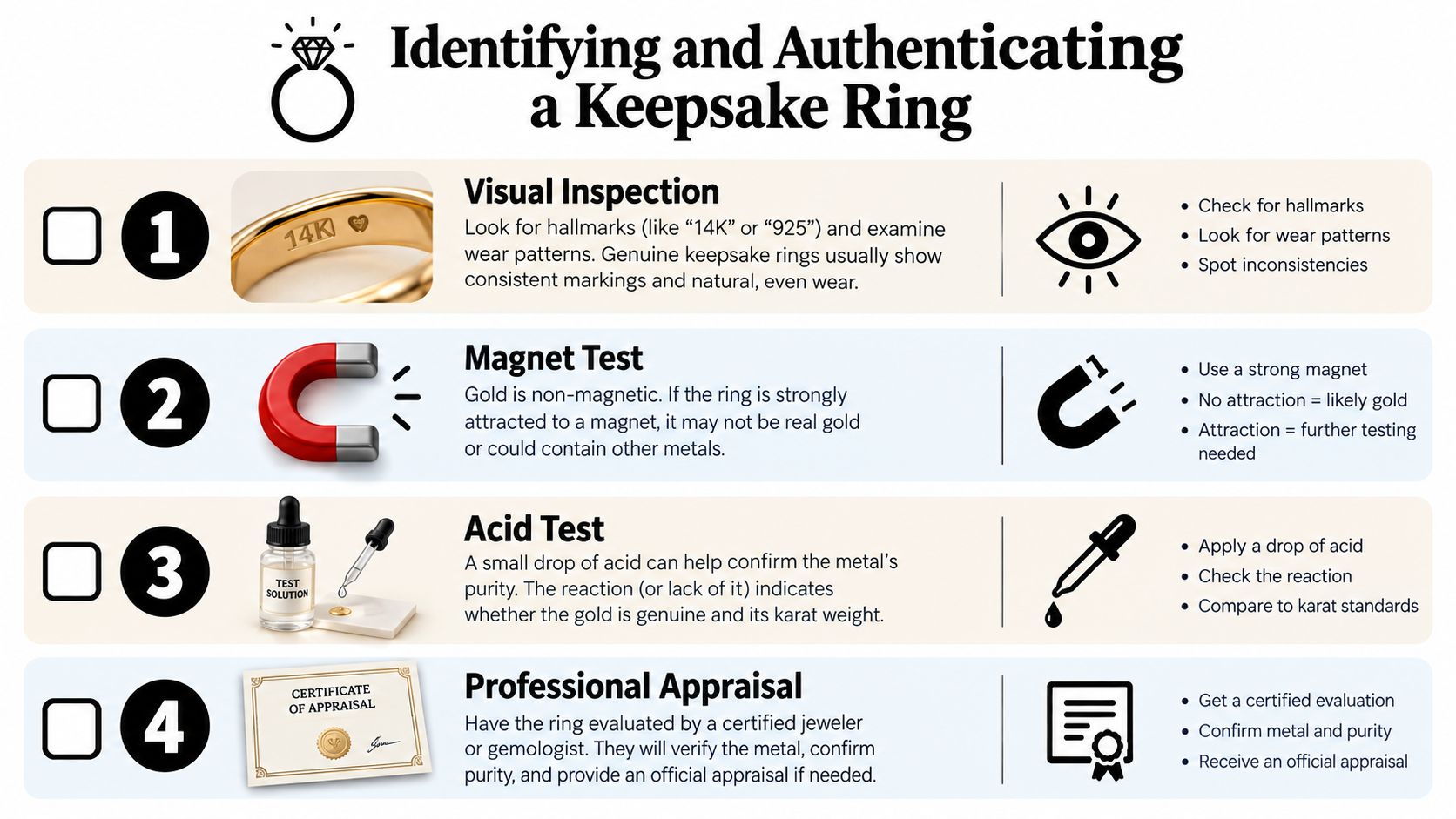
First, inspect the edges, prongs, and back of the setting. Plating often wears through there first, revealing a different colored metal underneath. Check whether the hallmark font, depth, and placement look consistent with the rest of the ring. Then weigh it and look at its dimensions. A wide band that feels surprisingly light may be hollow construction, which means appearance overstates gold content.
Testing Metal and Stones
- Magnet check: Gold isn't magnetic, so strong attraction is a warning sign, though clasps and springs can complicate results on other jewelry.
- Electronic testing: A counter tester gives a fast, non-destructive purity indication on a clean contact point.
- Acid testing: Nitric acid on a small scratch sample confirms karat more definitively, and it's best left to a professional because it can damage finish and stones.
- Gemstone checks: A loupe helps separate natural inclusions from the bubbles and mold marks often seen in glass. The fog test can hint at diamond, but it doesn't prove anything.
Watch how a basic at-home check compares with a counter test before you rely on either one alone.
Document what you find. A useful record includes the karat mark, gross weight, estimated non-gold weight, and any independent test result. That record protects you when you compare offers, because you're comparing the same facts instead of competing opinions.
Key Factors That Drive a Keepsake Ring's Value
Two rings can both be stamped 14k and get very different offers. The difference isn't mysterious. It comes down to how much recoverable gold is present and whether anyone wants the ring as a ring, not just as metal.
This ranking shows which factors usually move a cash offer most.
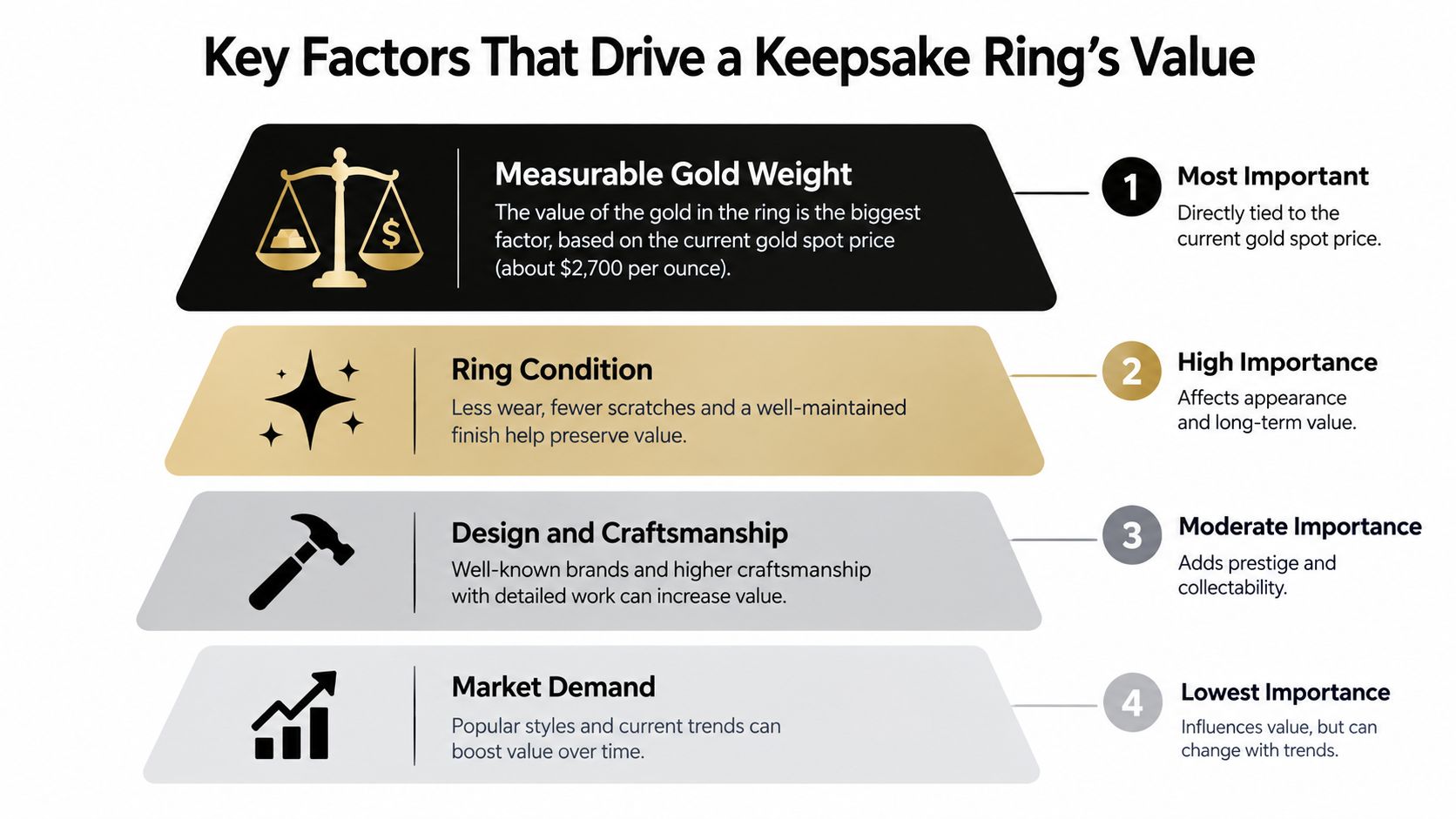
Measurable gold weight sits at the top. Buyers weigh the whole ring, then account for stones, solder, springs, and non-gold components that don't contain recoverable gold. A heavy, plain band is easy to price. A ring loaded with small stones requires more estimation, and buyers get conservative when they have to guess.
What Adds or Subtracts Beyond Weight
Condition comes next. A round shank, secure prongs, and a clean finish support a resale premium. A cracked stone, thin worn band, missing accent stones, or heavy engraving with someone else's initials usually pushes the ring toward melt based pricing. Repairs cost the next owner money, so they reduce what a buyer can pay you.
Maker and design matter only when there's a buyer for that maker or style. A signed designer piece in good condition can carry value beyond its gold weight. An unsigned ring in a dated style usually won't, even if it originally cost a lot at retail. Provenance documentation such as original receipts, brand boxes, or gemstone reports helps support that premium. Without paperwork, the ring has to prove itself through testing and inspection.
Color plays a smaller role. Yellow, white, and rose 14k contain the same gold fineness, but white gold may need rhodium plating to restore its bright finish, and that future cost can trim an offer. Sentimental significance, understandably, doesn't add to a buyer's number. It adds to yours, which is why some rings shouldn't be sold.
Practical Care and Cleaning for a Keepsake Ring
Clean a 14k keepsake ring before you show it, photograph it, or put it back into daily wear. Dirt hides hallmarks, dulls stones, and makes normal wear look like damage. You don't need specialty products for a basic clean.
This is the gentle method that works for most solid gold rings without fragile stones.
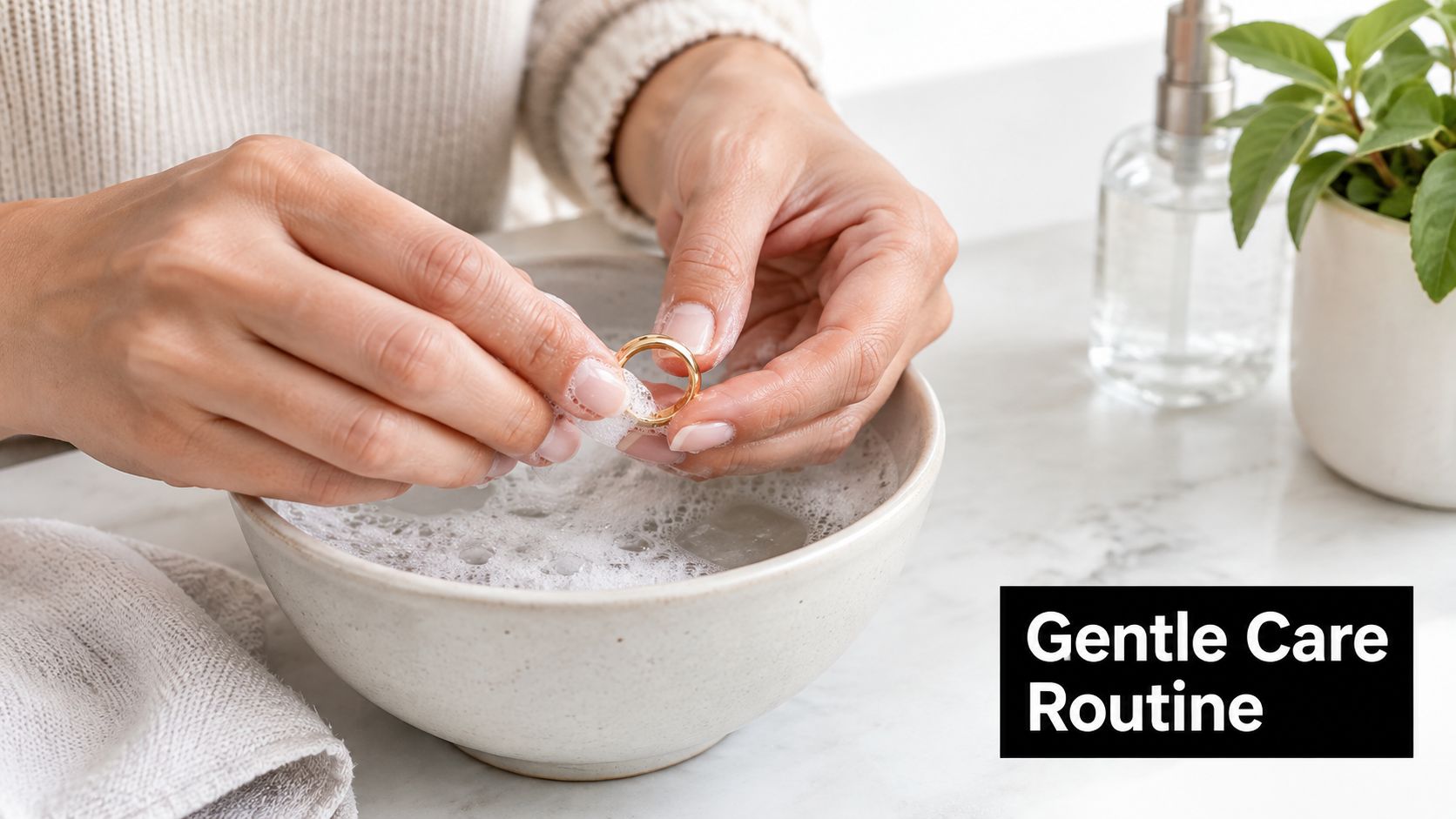
Soak the ring in warm water with a little mild dish soap. Use a soft toothbrush around the setting and under the stones, rinse well, and pat dry with a lint free cloth. That's enough for routine buildup from lotion, skin oil, and dust in engraving.
What to Avoid and When to Get Help
Skip abrasive toothpaste, baking soda scrubs, and household chemicals. Keep the ring away from chlorine, and don't put fracture filled, cracked, or delicate stones into an ultrasonic cleaner at home. Store it in a separate soft pouch so harder stones on other pieces don't scratch the gold. Take it off before the gym, yard work, and the pool.
Professional help is worth it for loose prongs, a thinning shank, a bent band, or white gold that has yellowed and needs re-plating. Don't pay for major repairs just to sell the ring unless a buyer tells you a specific repair will change the category from melt to resale. Usually, cleaning helps presentation. Costly restoration rarely pays for itself in a cash offer.
Realistic Pricing Ranges and Appraisal Tips
Pricing starts with melt value, even for rings that eventually sell for more. Melt value is the value of the recoverable gold content based on tested purity and net gold weight. Replacement value is different. That's an insurance figure for remaking or replacing the piece at retail, and it's normally far above a cash offer. Resale value falls between the two when the ring is wearable, attractive, and in demand as finished jewelry.
Use weight tiers as a sanity check, not as a promise. Gold prices move, buyers deduct refining and business costs, and stones or hollow construction change the net weight quickly.
| Weight | Typical Offer Range | What Moves the Number |
|---|---|---|
| Light band, for example around 3 grams gross | Lowest melt based tier | Thin shank, engraving, and small stones reduce net gold weight |
| Midweight ring, for example around 5 grams gross | Middle melt based tier, possible resale premium | Solid construction, good condition, and a current style help |
| Heavy ring, for example around 10 grams gross | Highest melt based tier of the three | Signed maker, quality stones, and strong condition can add beyond melt |
Choosing the Right Kind of Appraisal
A formal written appraisal from a qualified gemologist makes sense when you need insurance documentation for a designer piece or a ring with significant stones you'll keep wearing. It doesn't make sense just to sell a plain band. For a sale, a documented in-store evaluation with tested purity and a precision weight gives you the facts that drive the quote.
Ask any buyer three questions. What karat did you test it as? What net weight are you paying on? Are you pricing it as melt or as resale jewelry? If a buyer can't answer those clearly, get another quote. A low offer with a clear explanation is more trustworthy than a vague high offer that shrinks at payout.
Selling or Pawning at Idaho Pawn and Gold Exchange
Walk in with the ring and a government photo ID. That's the core requirement. Bring original receipts, brand packaging, prior appraisals, or gemstone reports if you have them, because they can support maker and stone claims. Don't worry if you don't have paperwork. Most inherited rings arrive without it, and testing fills the gaps.
At the counter, expect a one on one evaluation. Staff inspect the hallmarks, test the metal, weigh the ring on a precision scale, and assess stones and condition. Idaho Pawn and Gold utilizes state-of-the-art technology for authenticating luxury products and emphasizes a transparent, customer-focused approach to ensure clients receive the highest value for their items. You should be able to watch the scale and hear whether the quote is based on melt value alone or includes a design or maker premium.
Pawn Loan or Outright Sale
A pawn loan uses the ring as collateral for short term cash while preserving your ability to reclaim it under the loan terms. That's the right fit when the ring has family meaning and your cash need is temporary. An outright sale ends ownership, is faster, and usually produces the higher immediate payout because the shop takes full resale risk.
Skip pre-sale repairs and deep polishing. A gentle soap and water clean is enough. Don't remove stones, cut a stuck ring yourself, or try acid testing at home right before a visit. Damage done during preparation lowers offers.
Negotiate from facts, not retail memories. If you know the tested karat, gross weight, and whether the ring is hollow, you can discuss the quote intelligently. Mention comparable offers if you have them in writing. Boise, Meridian, and Nampa customers can use the same checklist at any location: ring, photo ID, any paperwork you already have, and a clear decision on whether you'd accept a loan, a sale, or neither if the number misses your threshold.
Deciding Whether to Keep, Insure, Redesign, or Sell
The hardest question is when does a 14K keepsake ring function as an asset, and when is it primarily a personal object? Current market conditions sharpen that choice. The World Gold Council full year 2025 jewellery demand report reported global jewelry consumption fell to a five-year low of 1,542 tonnes, while jewelry demand value rose 18% to a record US$172 billion. Higher gold prices drove value up even as people bought fewer physical pieces, shifted toward lighter jewelry, and used trade-ins to manage affordability.
That backdrop doesn't make every ring an investment. A lightweight 14k ring can carry enormous emotional weight and limited bullion value. Resale depends on measurable gold weight, purity, condition, brand, design, gemstones, and buyer demand, not original retail price or family significance. A cash quote also isn't an investment return. It's what one buyer will pay today after accounting for risk and resale costs.
Matching the Decision to Your Situation
- Keep it: You wear it, or you'd regret losing it. Store it properly and check prongs before regular use.
- Insure it: It's a designer or stone heavy piece you'll keep. Get written documentation suited to insurance.
- Redesign it: You love the material or stones but not the style. Understand redesign may cost more than the ring's cash value.
- Pawn it: You need temporary cash and want a path to get it back.
- Sell it: You don't wear it, no one in the family wants it, and cash serves you better than storage.
Whatever you choose, walk into any buyer with the ring itself and a photo ID. Add a gemstone report or appraisal only if you already have one. That simple kit gets you a real, test based answer, and a real answer is what turns a keepsake decision from stressful guessing into a choice you can stand behind.
---
Bring your 14k keepsake ring, photo ID, and any paperwork you have to Idaho Pawn & Gold Exchange for electronic authentication, precision weighing, and a transparent pawn or purchase offer based on tested purity and current gold value. Visit the Boise, Meridian, or Nampa team to compare your loan and sale options in person before you decide whether to keep, pawn, or sell the piece.